Jerusalem
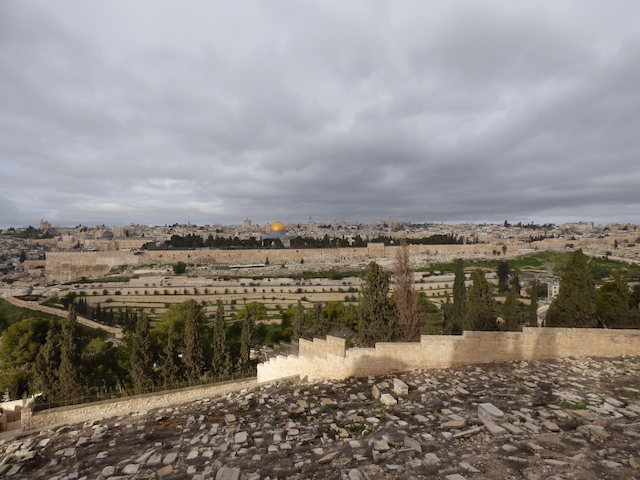
View of the Temple Mount (with the Dome of the Rock) from the top of the Mount of Olives.
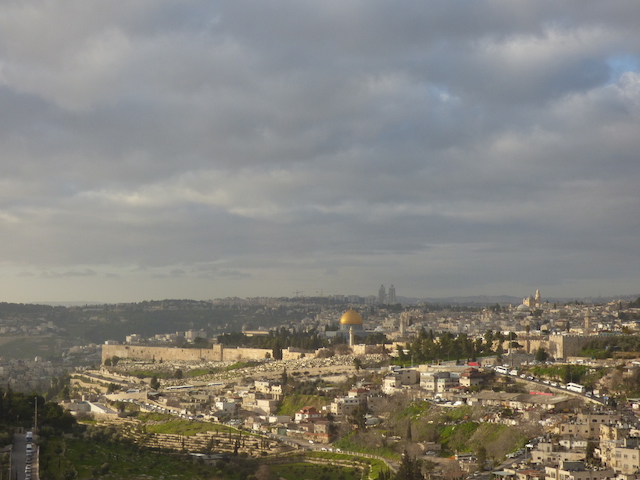
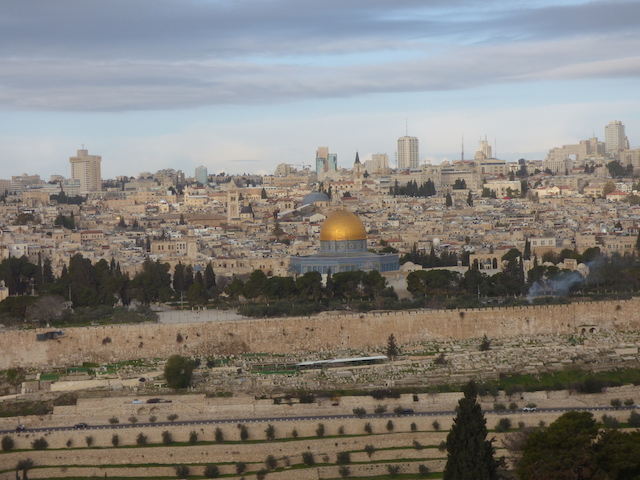
The Dome of the Rock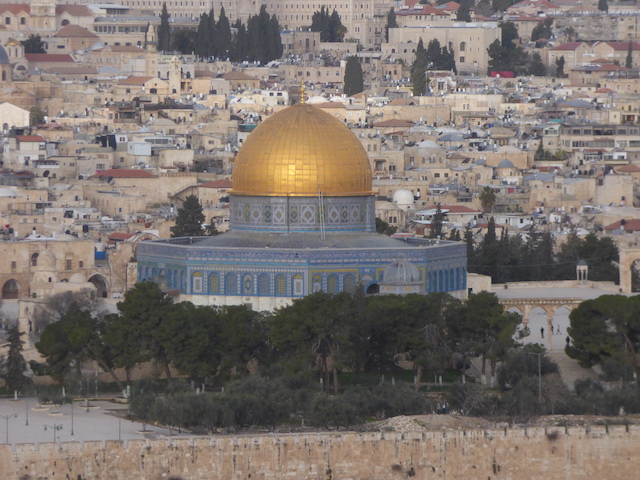
The Al-Aqsa mosque (on the south end of the Temple Mount)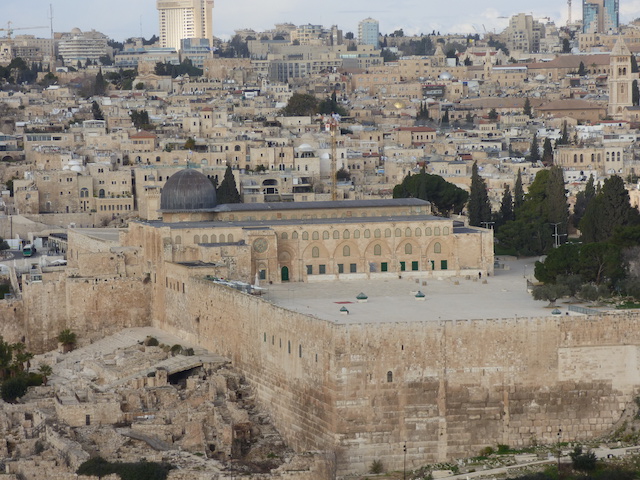
The Golden Gate (east wall of the temple mount). It’s been sealed and a Muslim cemetery placed in front of it.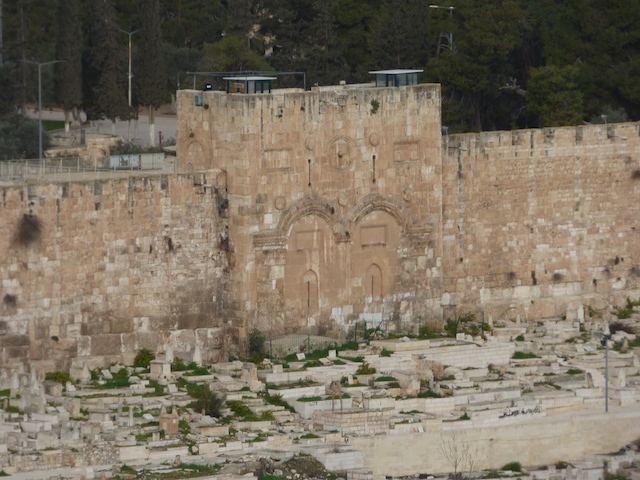
Dominus Flevit Church
Bone boxes (Ossuaries). In Jewish burial, the body is wrapped in a shroud until it completely decays. Eventually, when on the bones remain, they are gathered and placed into an ossuary for final burial.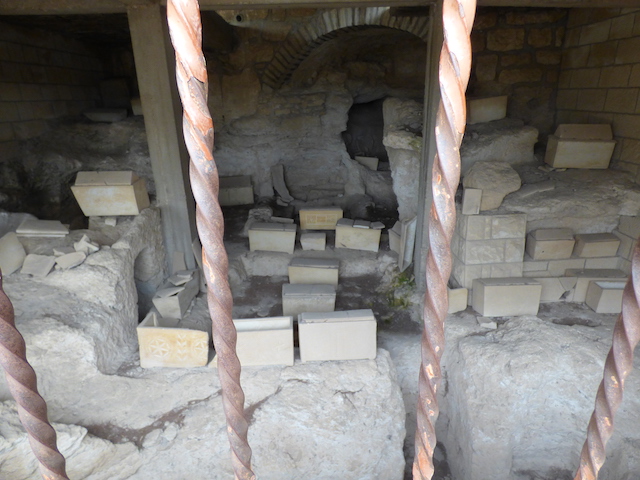
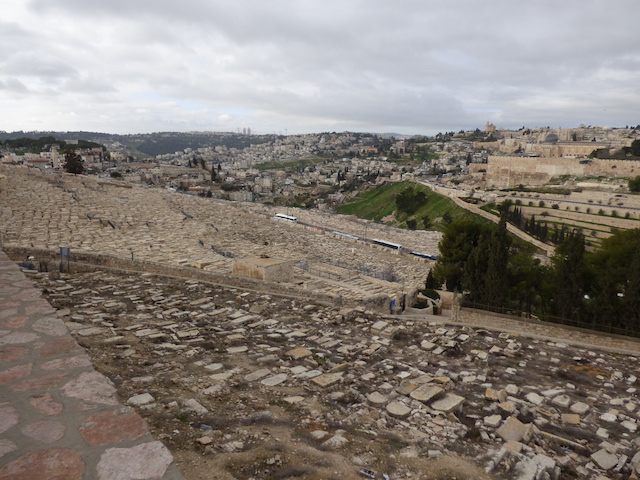
This photo is taken from the traditional location where Jesus stopped and wept over the city. In the foreground is the largest Jewish cemetery in the world (located on the Mount of Olives)
Garden of Gethsemane
Inside the private side of the Garden of Gethsemane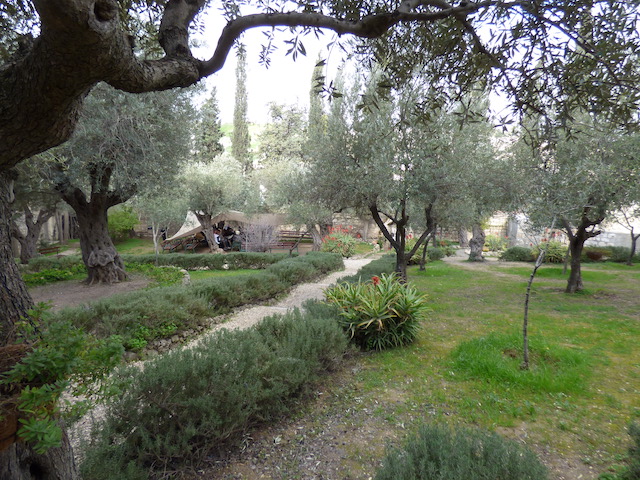
Worship and devotions inside the Garden of Gethsemane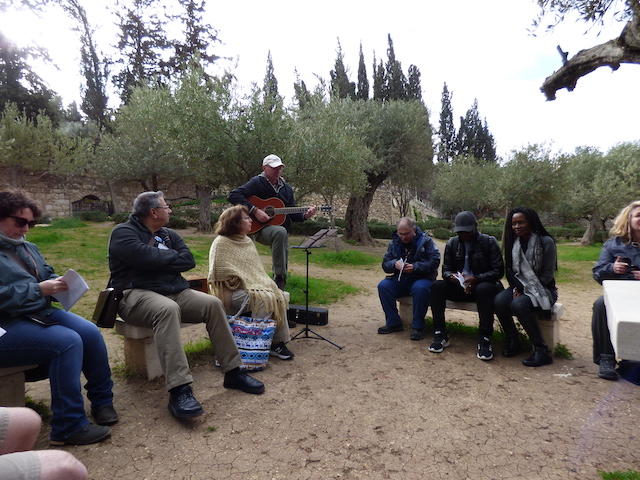
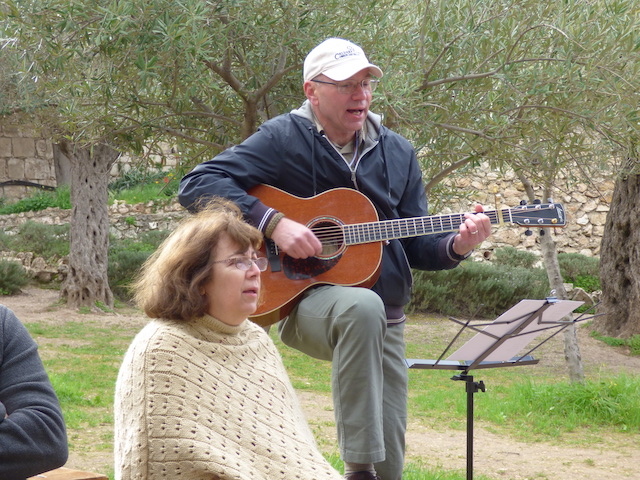
Olive trees in the Garden. Of course, this is the Mount of Olives!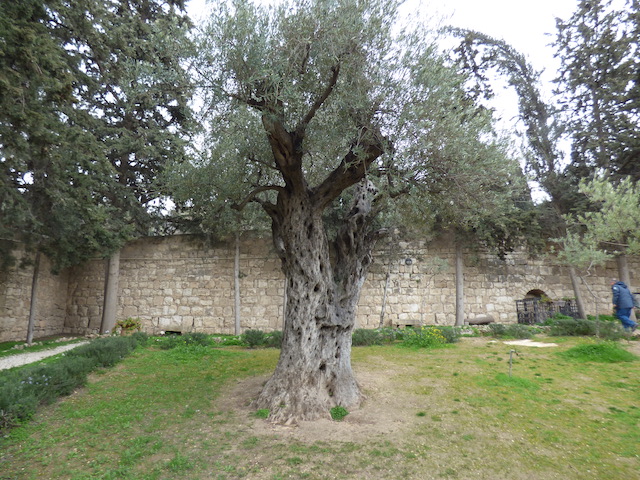
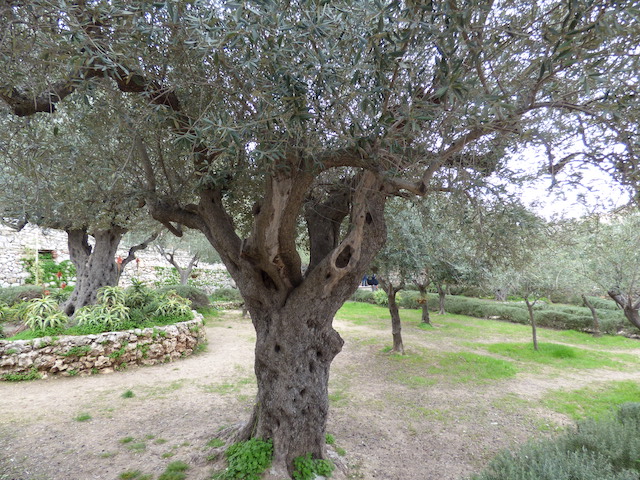
The Old City of Jerusalem
Here we’re entering the city through the “Lion Gate” (also known as Stephen’s Gate)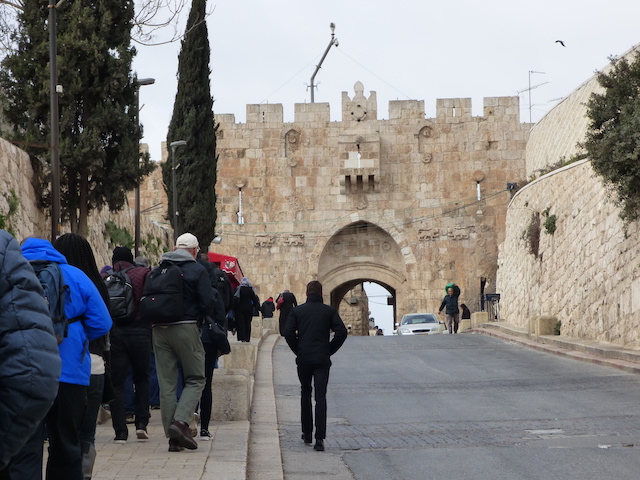
This is the church of Saint Anne. It is immediately adjacent to the biblical site of the Pool of Bethesda. It is known for it’s amazing accoustics.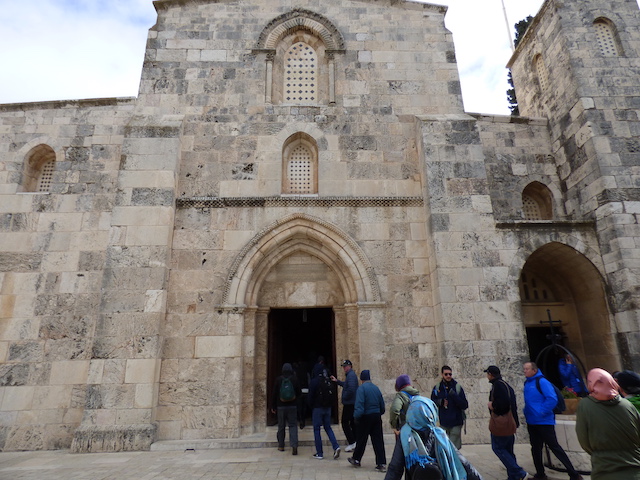
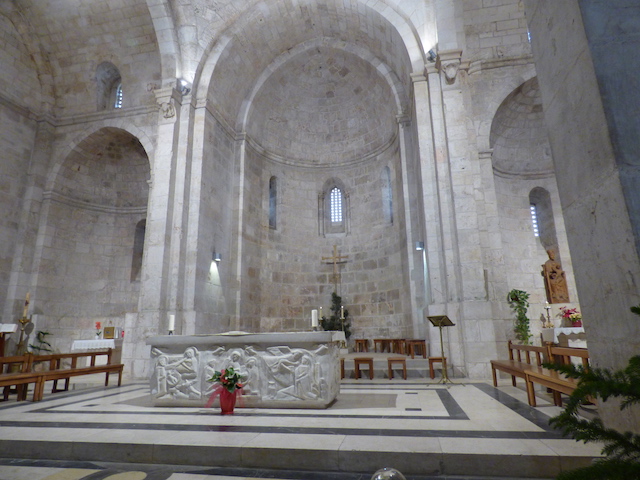
Our small group sang a hymn and it sounded like a 100-person choir!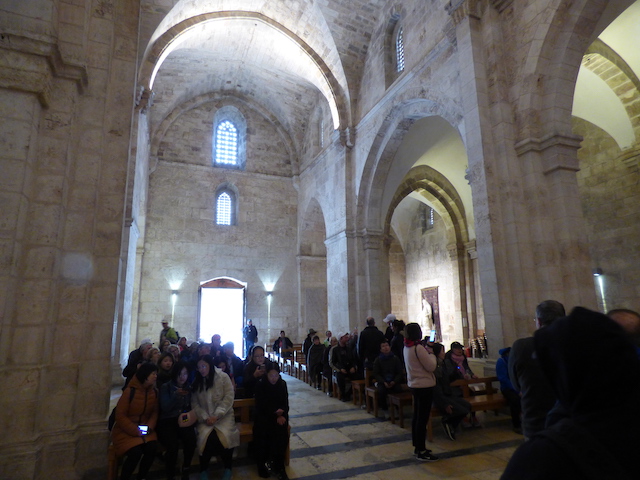
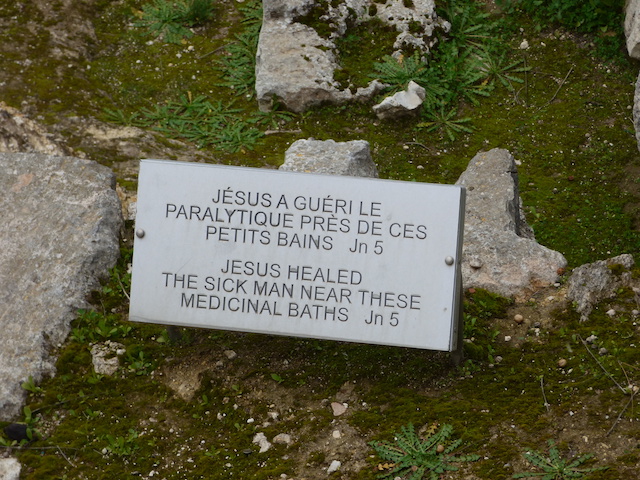
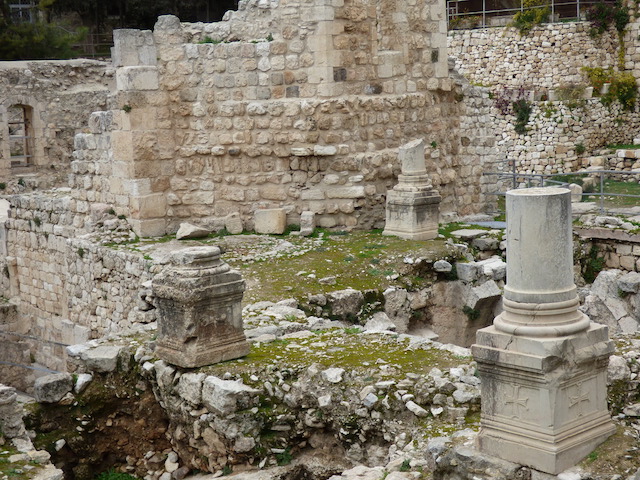
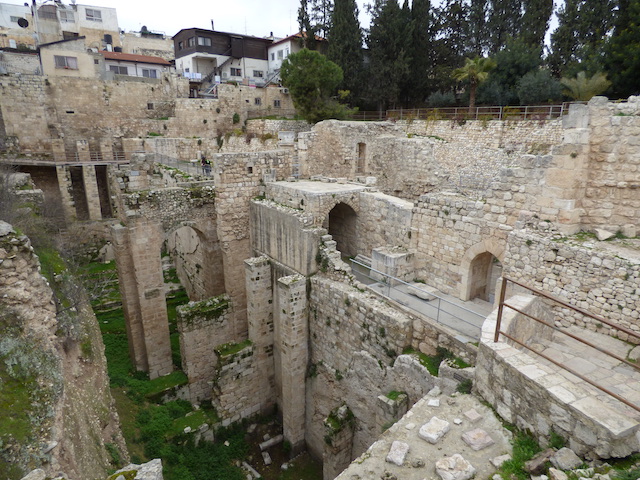
The Pool of Bethesda
This is the sight of one of Jesus many miracles, where he healed a lame man. The ruins are of a church that was constructed over the pool
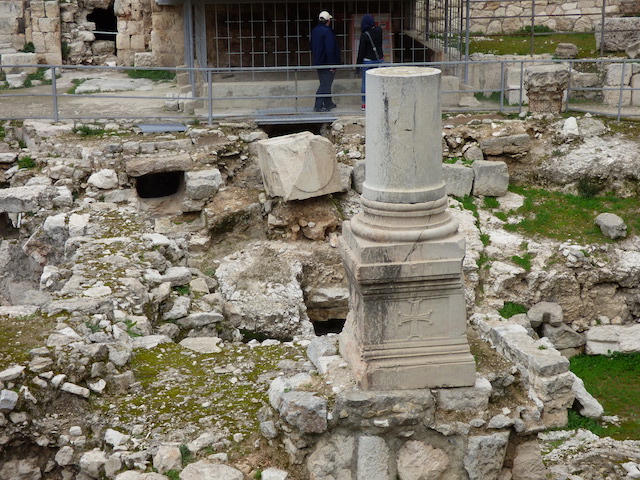
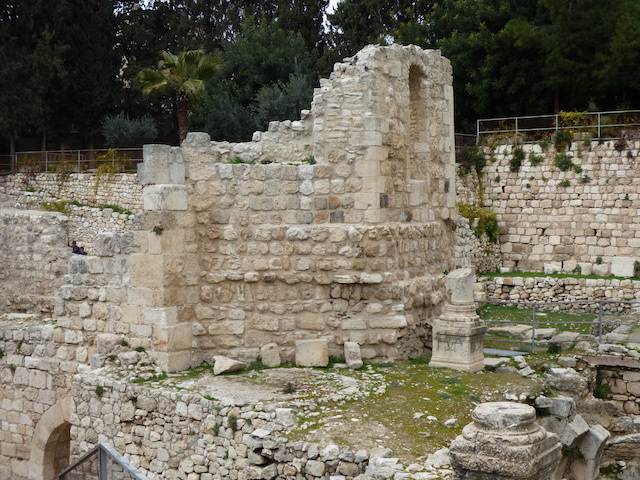
Another exterior shot of the church of Saint Anne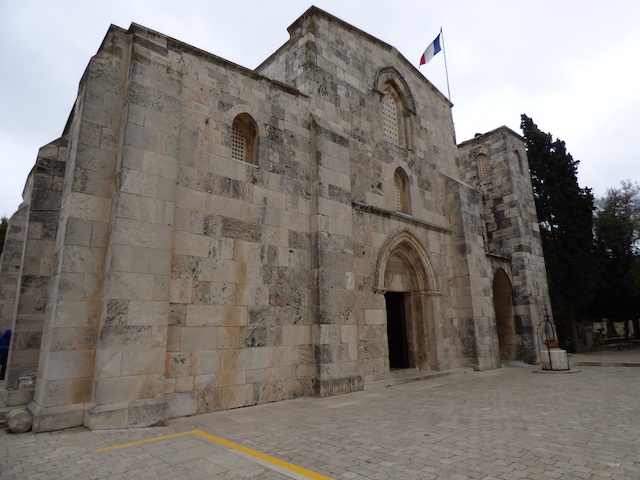
Via Delorosa (The Way of the Cross)
We’re moving to the first station on the Via Delorosa. The (now destroyed) Antonia Fortress would have been located immediately to our left.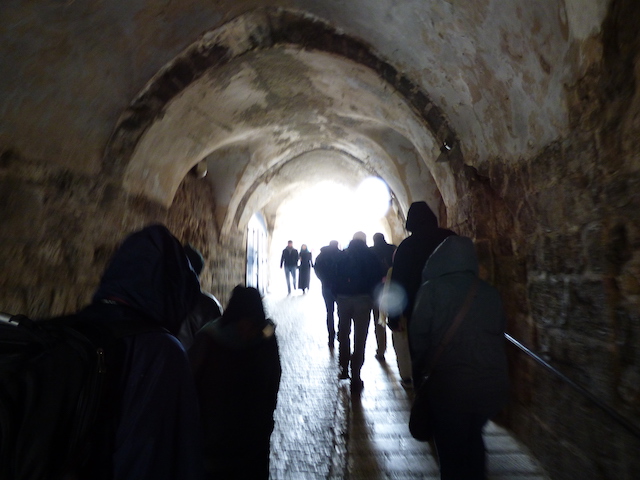
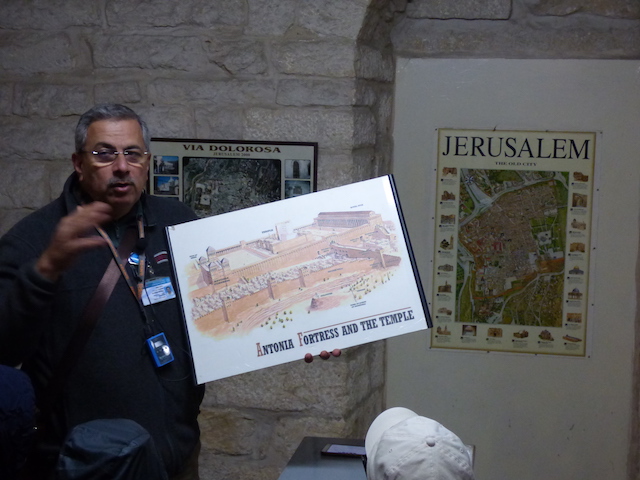
Our guide shows us a model of 1st century Jerusalem. The building we are standing in is built on top of the court outside the Antonia Fortress, where Jesus was tried before Pontius Pilate
Beneath the church is the original first-century court of the Antonia Fortress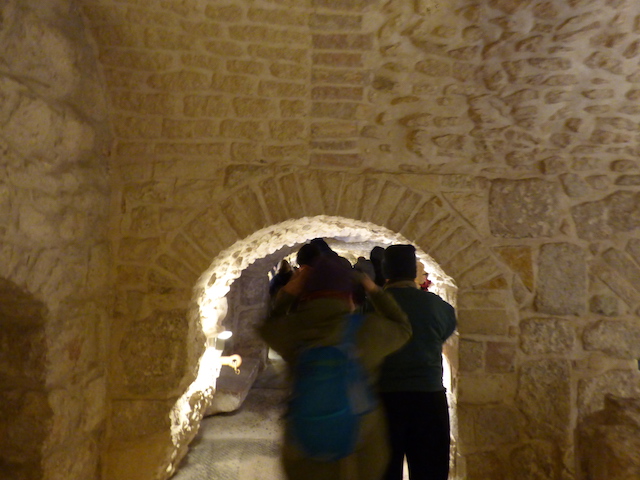
This lighted paving stone is inscribed with a game that Roman soldiers played with prisoners – essentially heads you die, tails you die.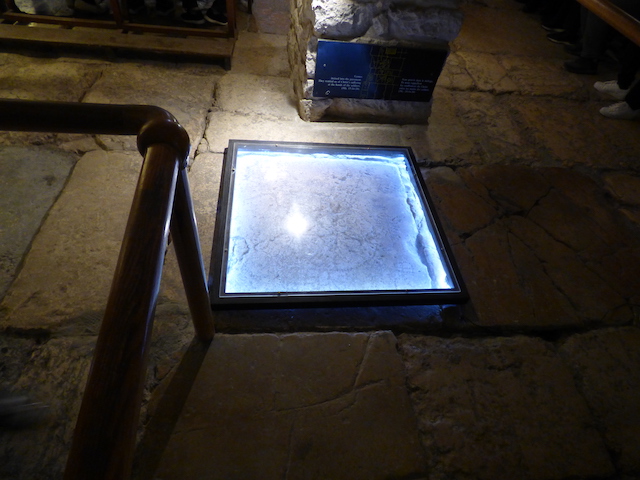
It is believed this is the location where Jesus was forced to pick up his cross and begin His journey to the place of execution. Those are first century paving stones.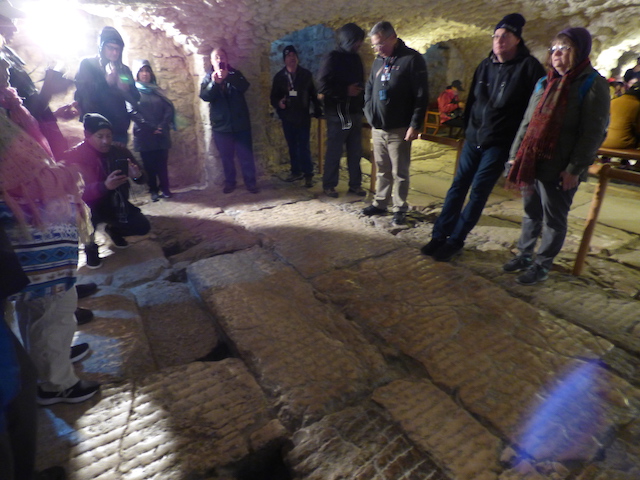
That moment is depicted in a tile mosaic adjacent to the site.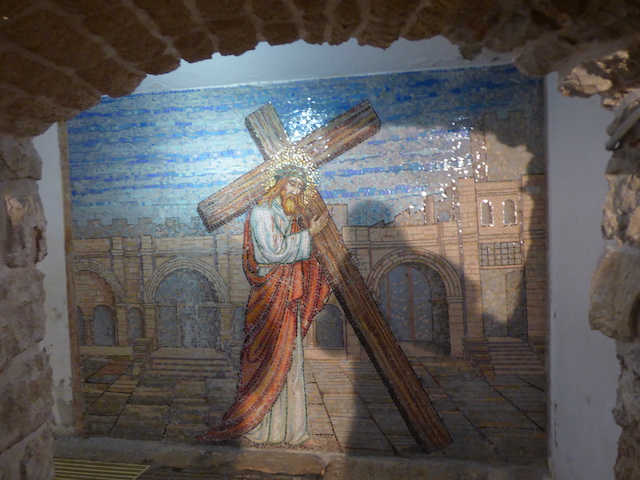
Continuing along the Via Delorosa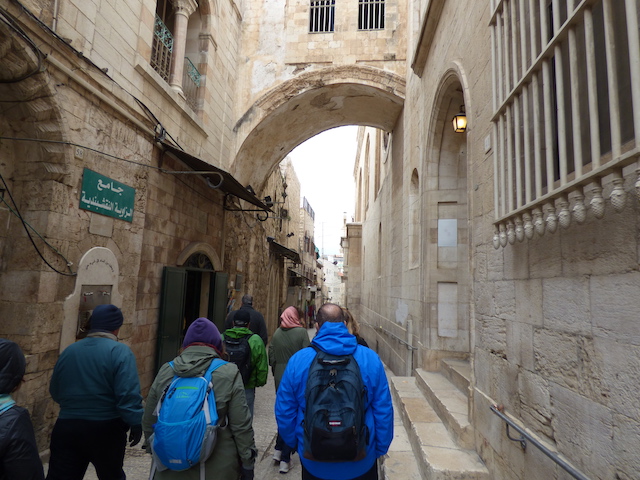
At this site it’s thought that Simon the Cyrene was forced to carry Jesus’ cross for Him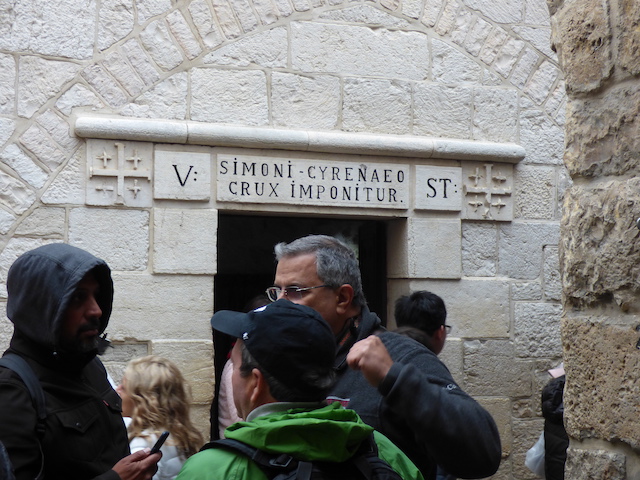
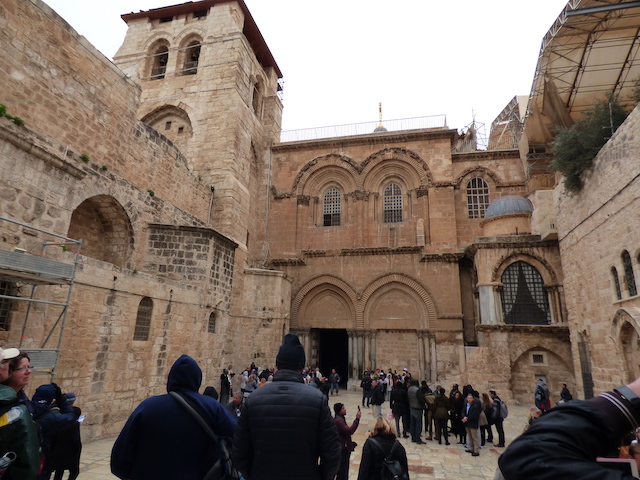
This is the entrance to the square in front of the Church of the Holy Sepulcher. It is traditionally the site where Jesus was crucified and buried. Most evangelicals reject this and believe he was crucified outside the city and buried in the garden tomb (also outside the city).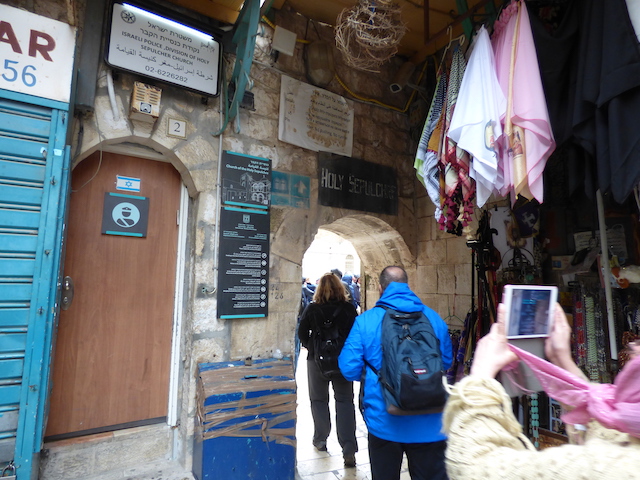
The church of the Holy Sepulcher
Any example of “graffiti” (etchings in stones) from the Byzantine era inside the Church of the Holy Sepulcher. People have been writing on walls for centuries!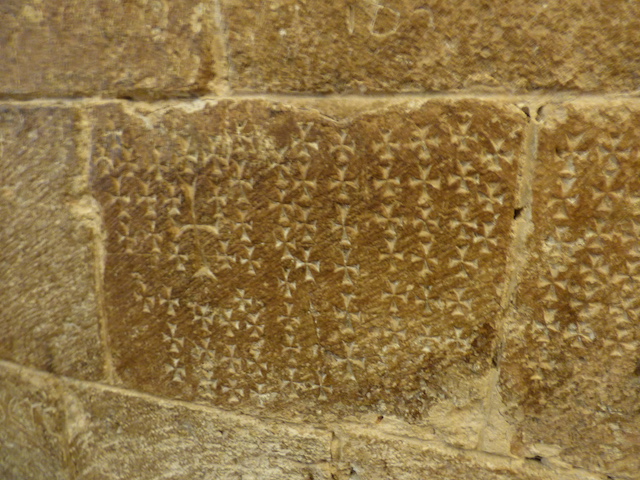
The Temple Mount Institute
The Temple Mount Institute has been preparing for the rebuilding of a third Jewish temple on the Temple mount by preparing all of the temple vessels, instruments, garments, etc for use in that temple. I”ve been following their progress for years. Their visitor center has all of the items on display.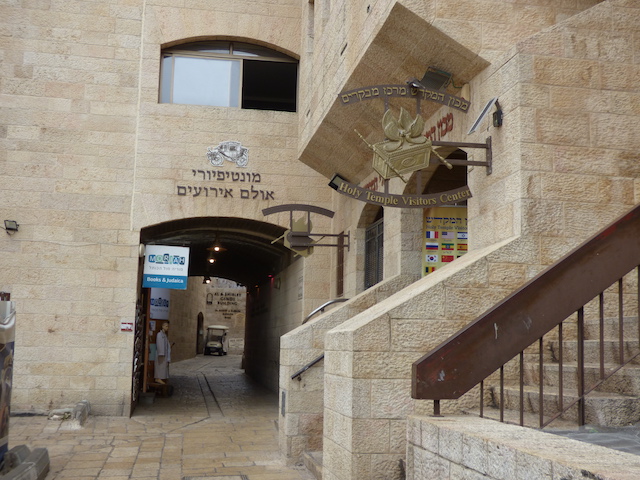
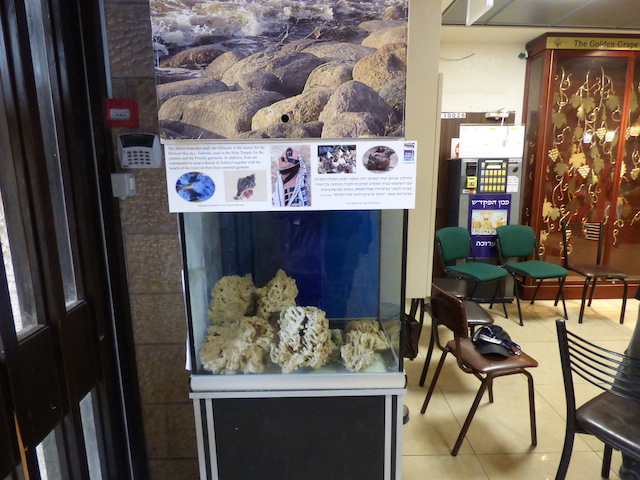
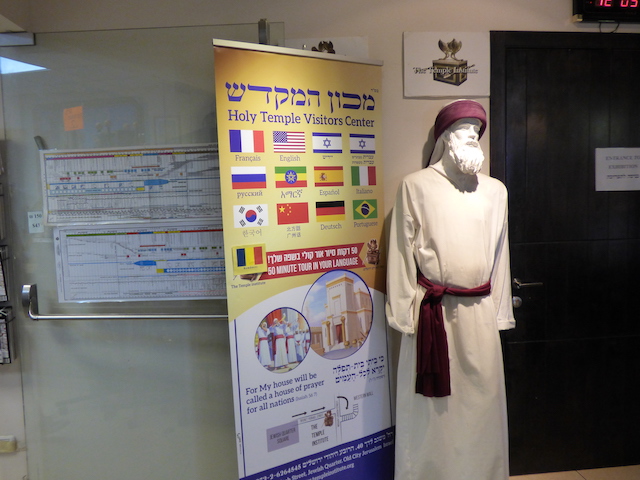
Unfortunately, no photography inside the exhibit is permitted. However, I snapped this photo of a model of the 2nd Temple before that announcement came over the speakers.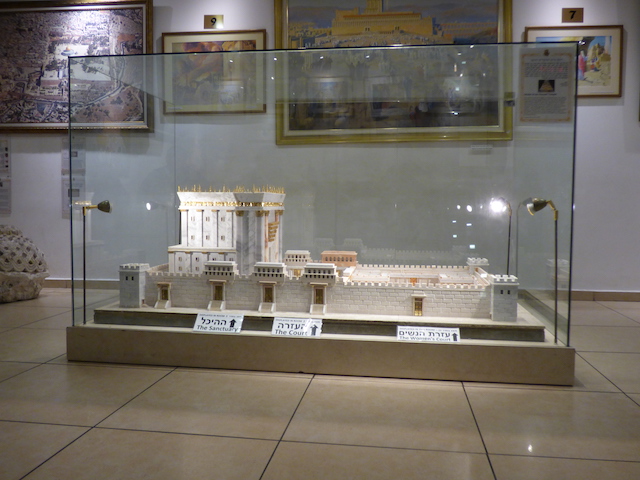
The Southwestern section of the Temple Mount
There is a large museum with exhibits and display here, including this timeline of history.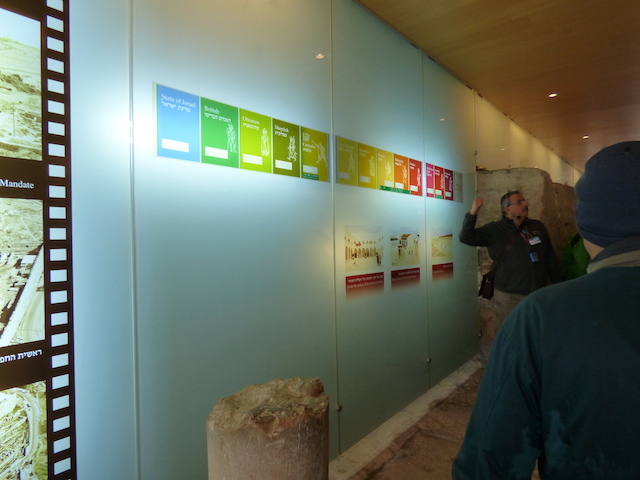
Here’s a wide shot of the southwest corner of the Temple Mount.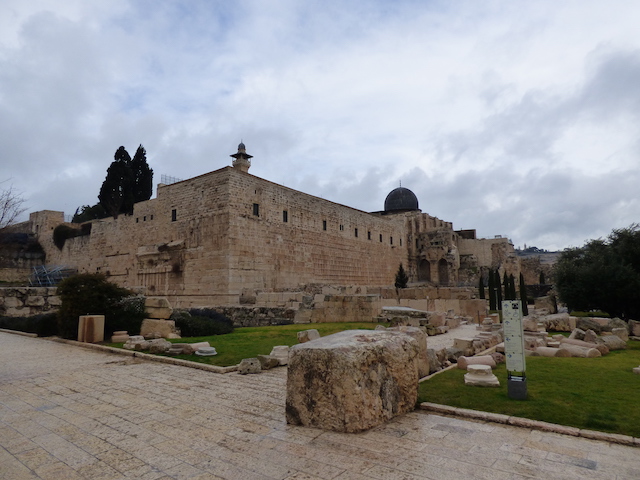
These steps are the southern approach to the Temple Mount (now blocked). The gate in this wall is the “Hulda” gate. It is the gate most often used by the poor. The lowest steps here are first century and were certainly used by Jesus and His disciples when they visited the temple.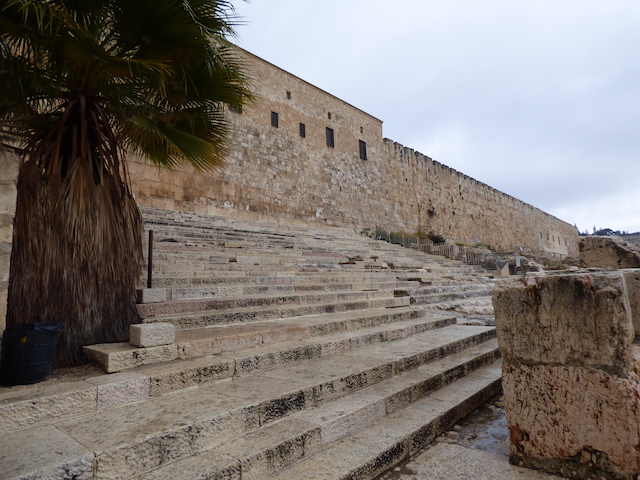
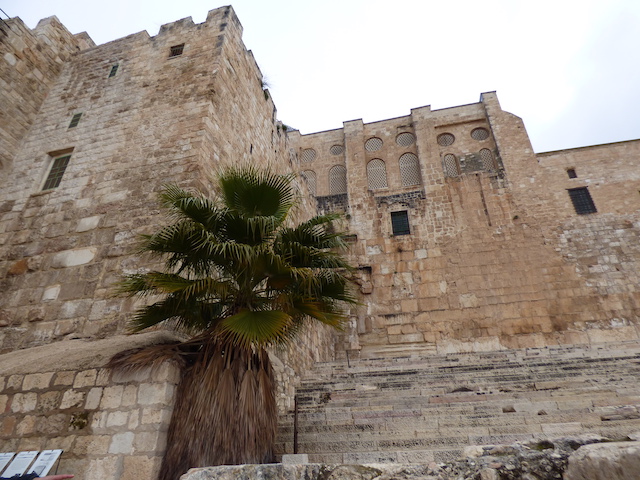
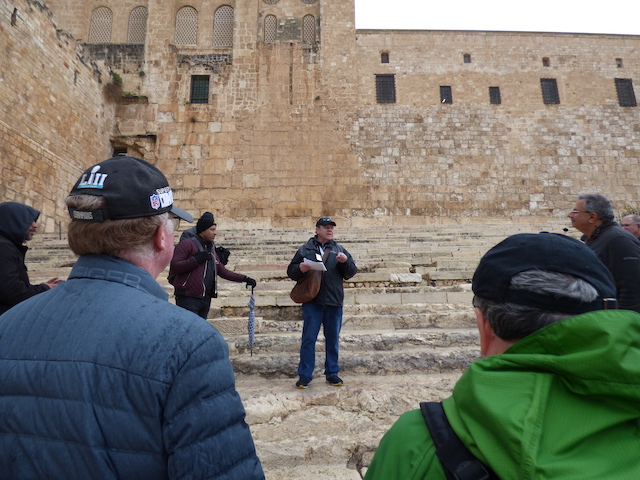
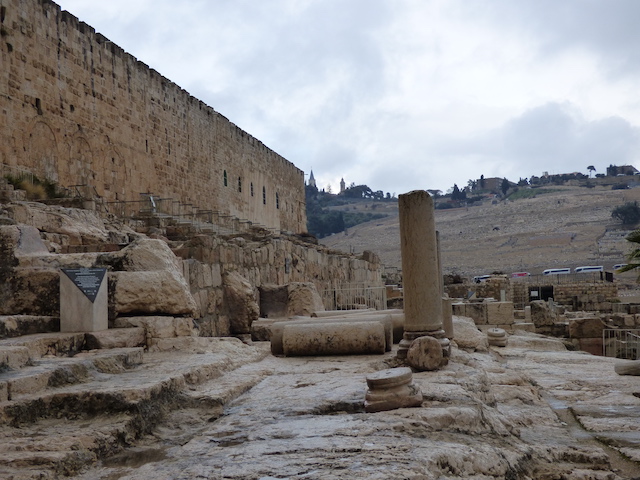
Closeup view of 1st century steps to the Temple Mount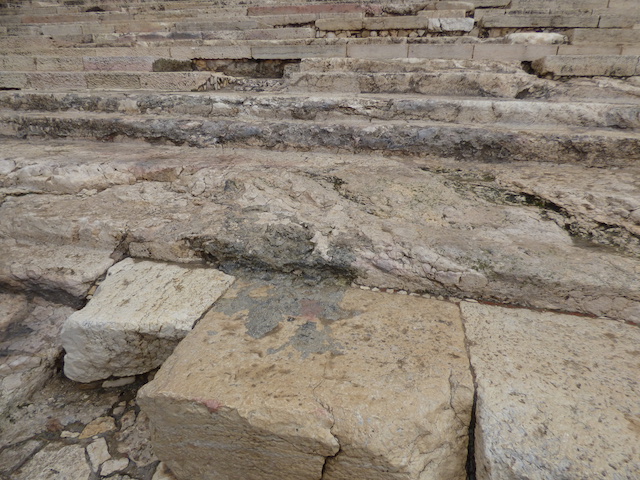
This Mikvah (ritual bath) is located just before the gates. Anyone entering the Temple courts would have to purify themselves before proceeding.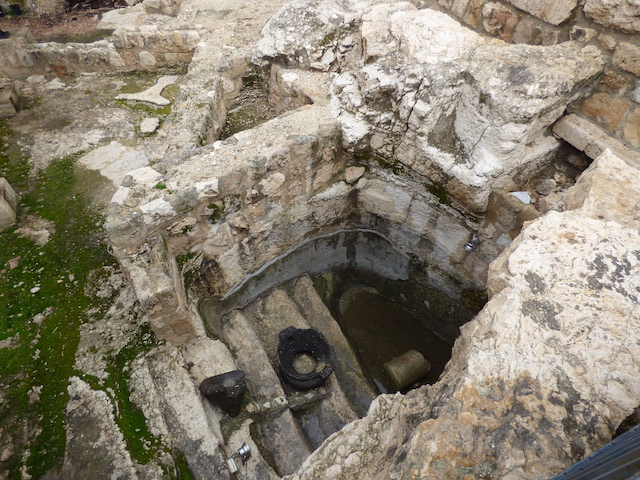
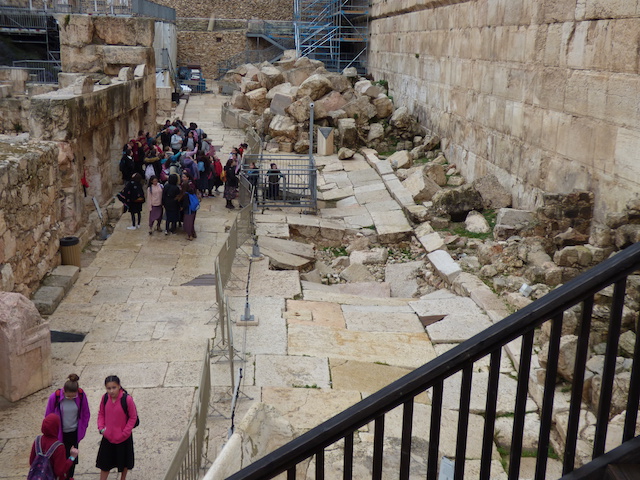
Here you can see (jutting out from the wall) the remains of Robinson’s Arch. It originally stretched to a building on the left and provided access to the temple mount. When the arch collapsed, it broke the paving stones below and created a hole that you can see today.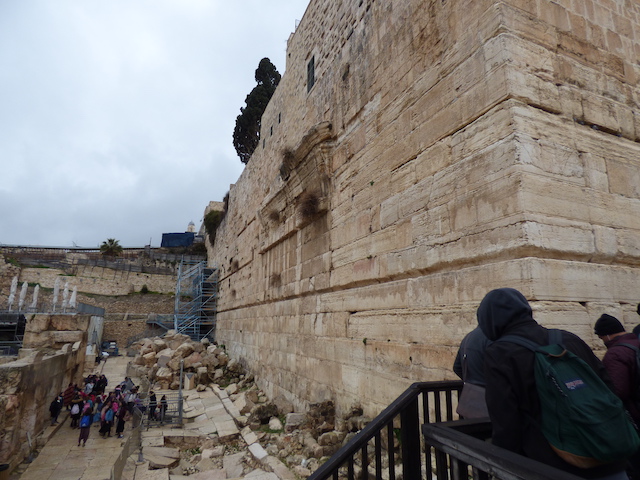
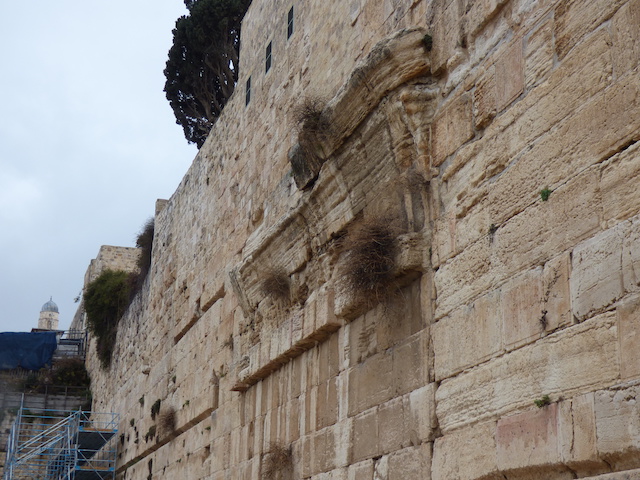
This is the location of the “other” side of Robinson’s arch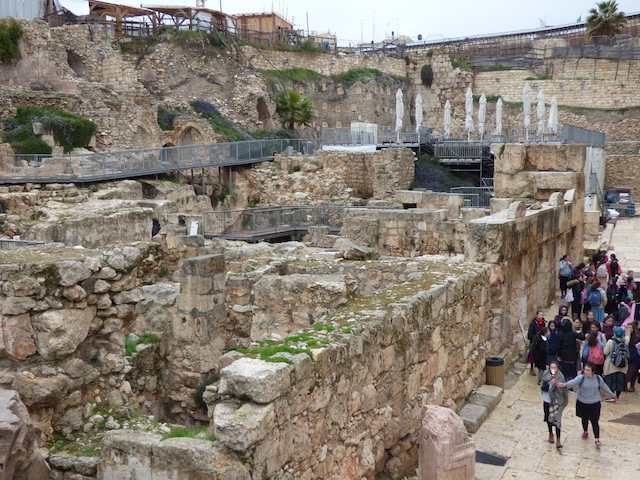
Palace of David
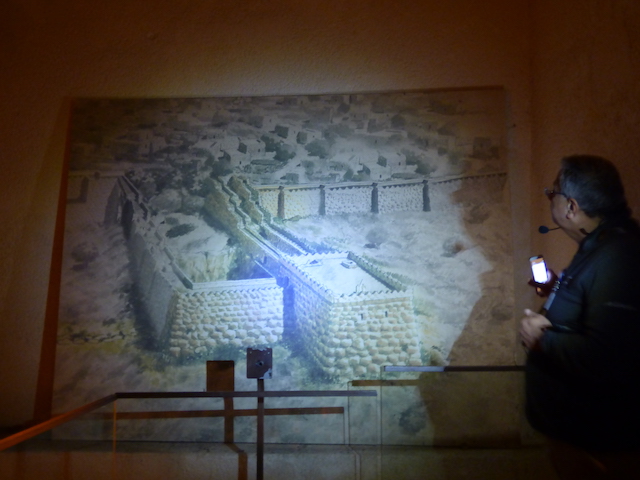
This site, which provides access to Hezekiah’s tunnel was only excavated 8-9 years ago. Many scholars believe that it is the ruins of the King David’s palace that was built by for him by the King of Tyre.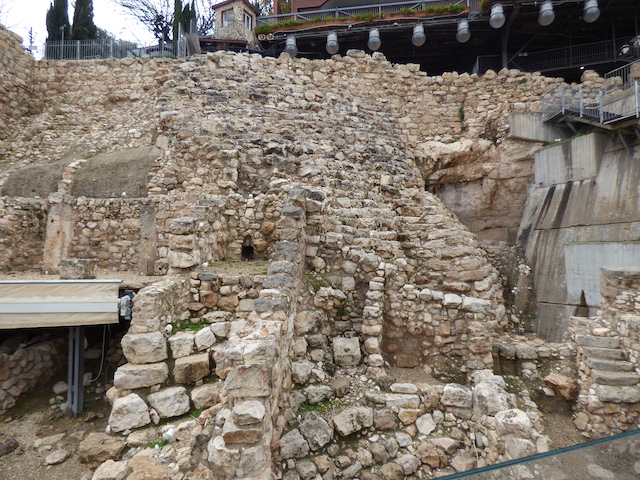
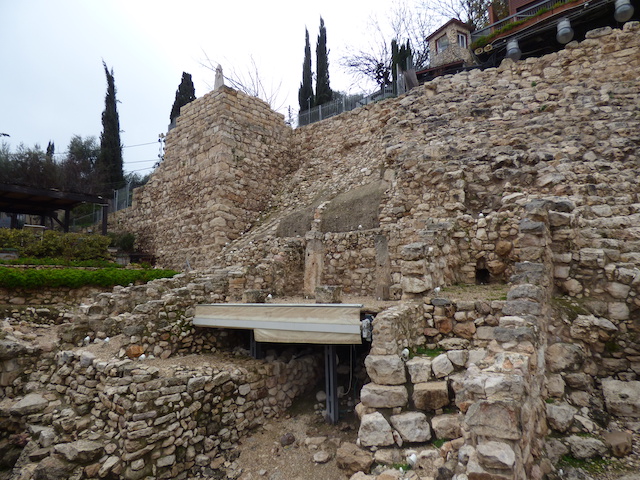
In the foreground is a “toilet”. Part of the evidence for this being David’s palace is that carbon 14 dating of the “contents” in this toilet date to the 10th century BCE (the era of King David)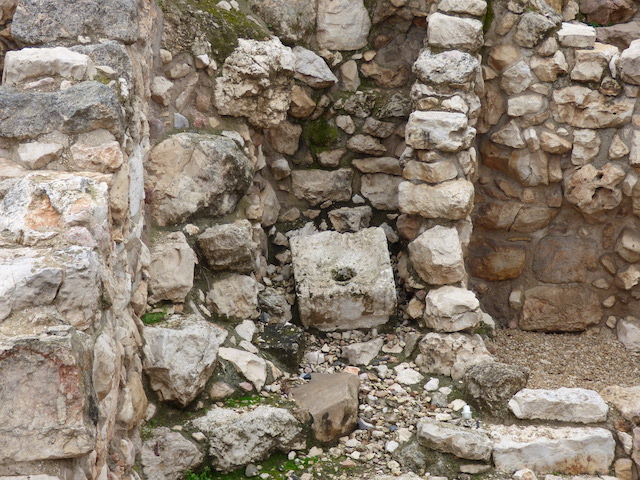
This model shows what the houses constructed adjacent to the palace would have looked like.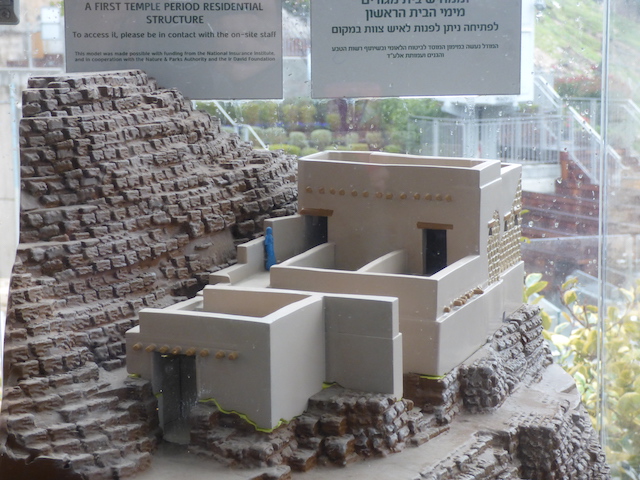
Hezekiah’s Tunnel
There are actually two tunnels that were excavated to bring water into the city during a time of siege. The earlier tunnel is Caananite. It is much shorter, (250 feet), not as difficult to navigate, and dry. It’s dry because it is too high to provide water to the city when the water level is so low. In other words, it’s useless
The second tunnel was constructed during the reign of King Hezekiah. Workers started from both ends (at the pool of Siloam outside the city and inside the city walls). The total distance covered was 1,750 feet. Even with not modern equipment, the two teams met in the middle. The tunnel is very narrow and (right now) is filled with water above your knees.
Below were are entering “Warren’s Shaft”. At the base you can either either the “dry” tunnel or the “wet” tunnel and proceed to the Pool of Siloam.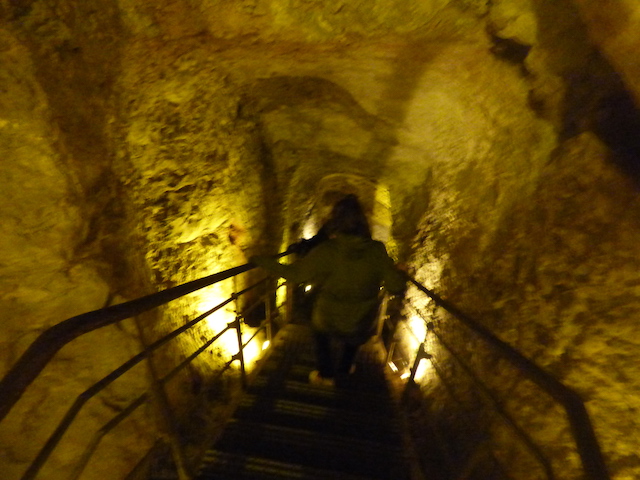
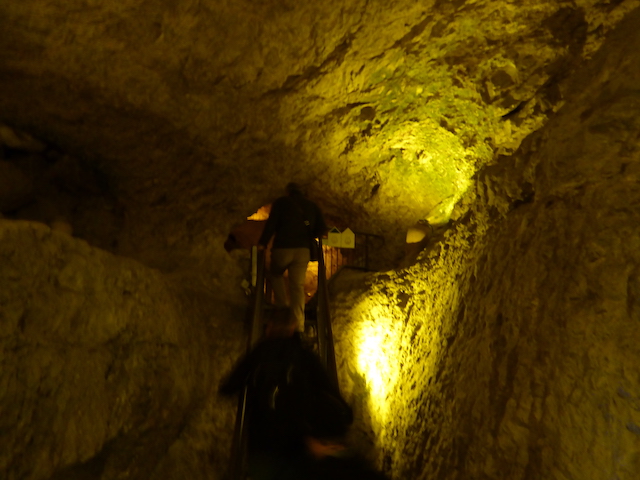
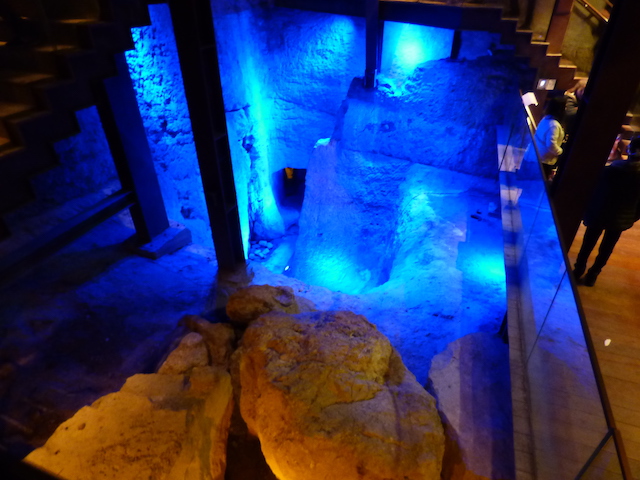
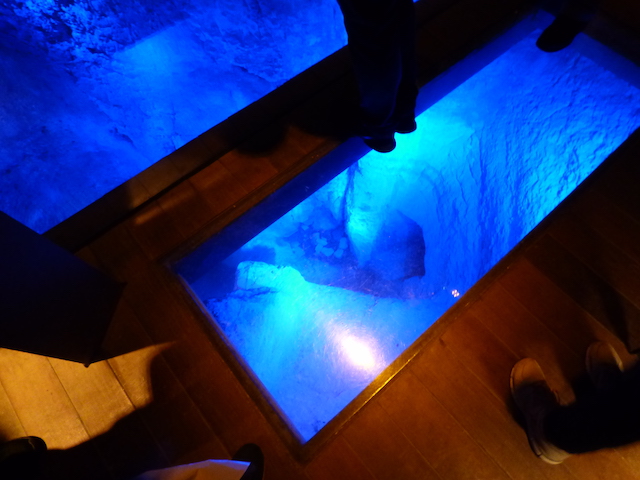
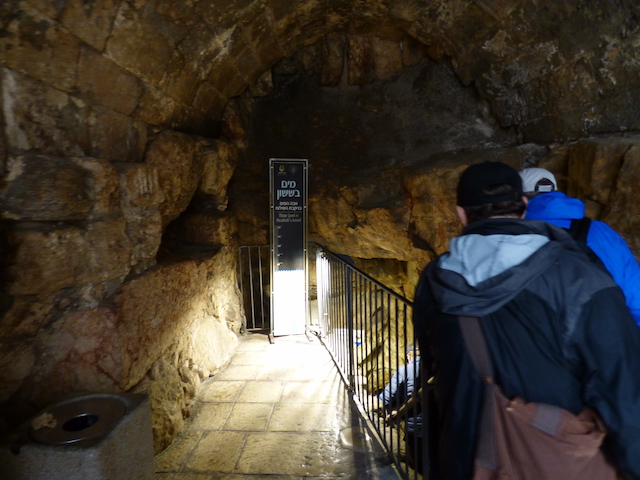
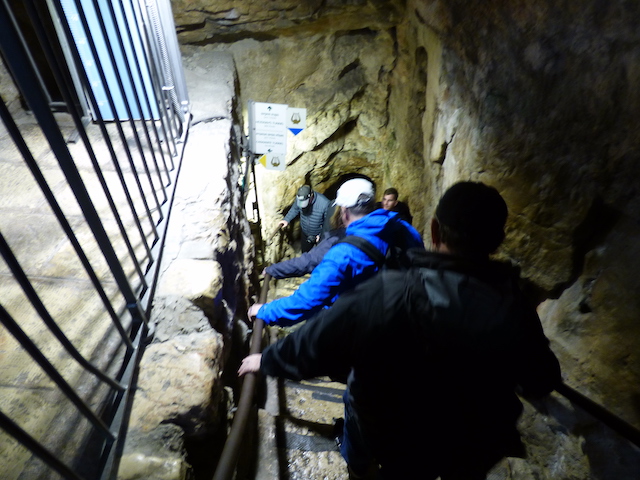
Here we are moving down the “dry” tunnel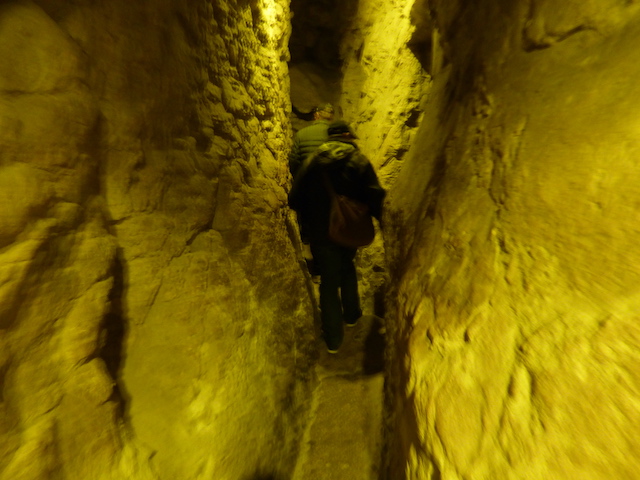
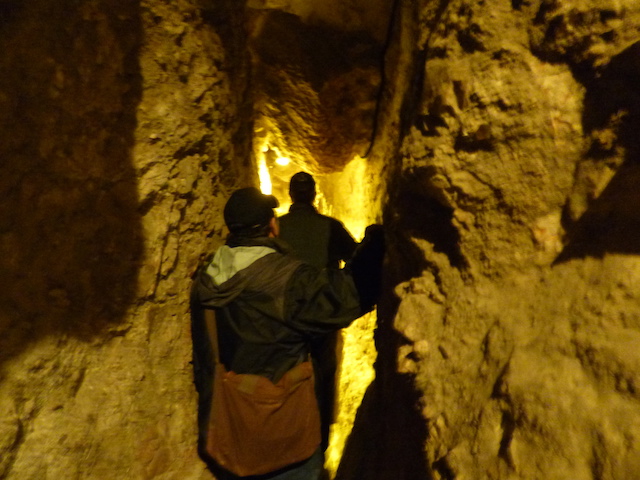
You can see that it gets a bit narrow in spots.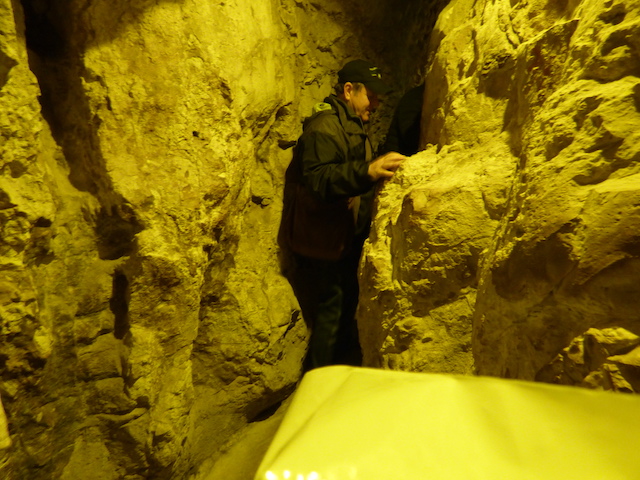
And here’s evidence that I didn’t wimp out!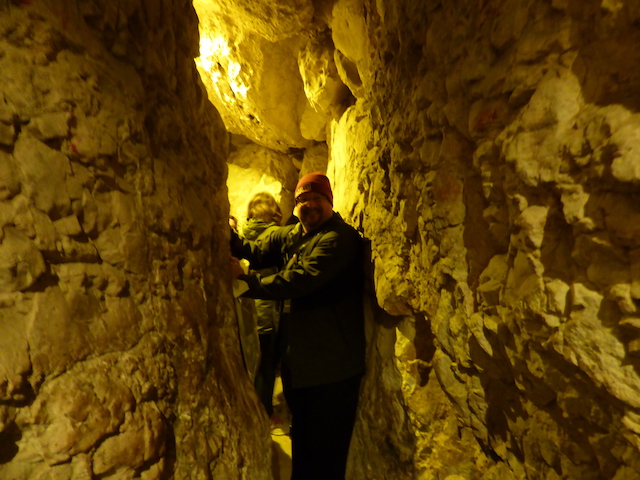
Pool of Siloam
Only a small portion of the Pool of Siloam has been excavated. Much of the property is owned by the Greek Orthodox church which refuses to permit any additional excavations.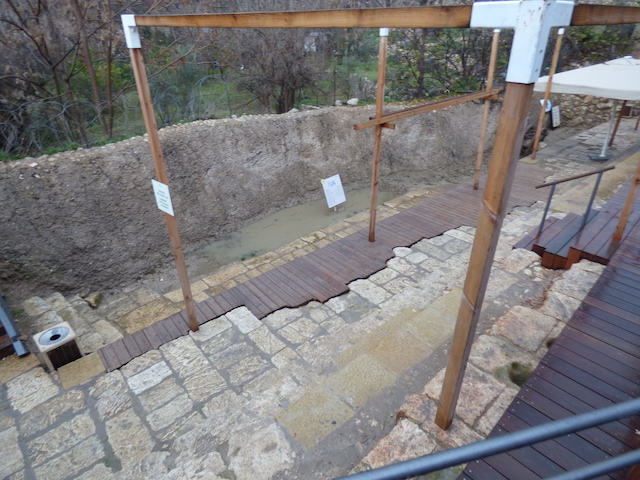
At the Pool of Siloam you can see the beginning of a 1st century (Herodian) street that runs all the way from this point to the southern steps of the temple mount. That’s quite a distance. It’s not currently open.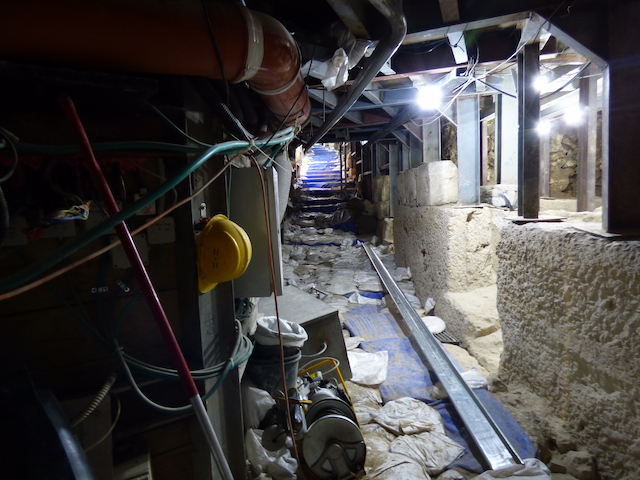

One Response to 2019 Israel Trip – Day 5