Gideon’s Spring
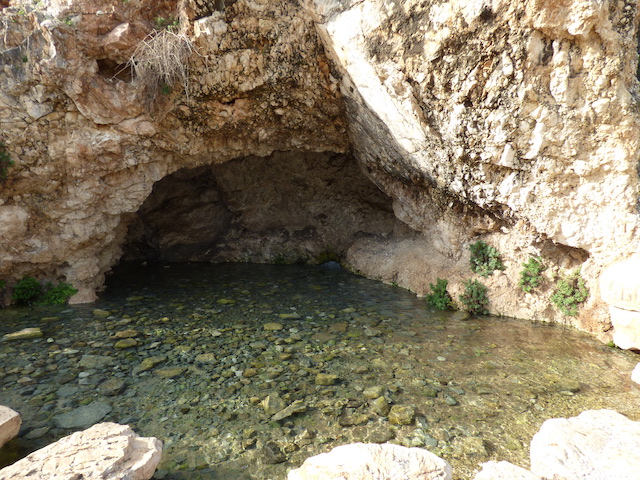
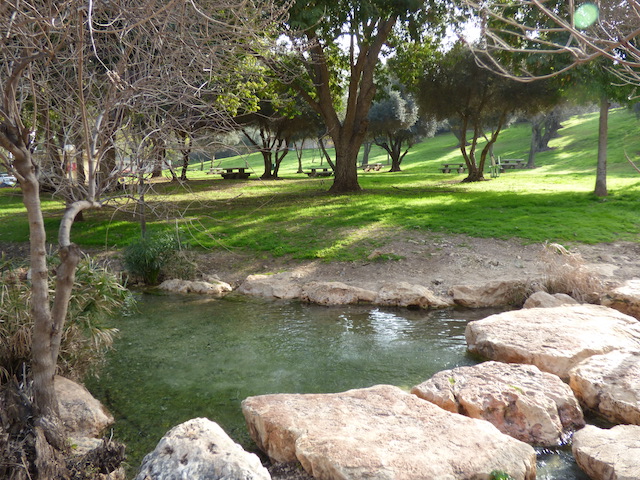
Located at the bottom of Mount Gilboa is Ein Harod, or the “Spring of Harod.” This is the pool where Gideon chose his 300 warriors to battle the Midianites. The warriors were chosen based on how they drank water (Judges 7:1-8).
Beit She’an
During a battle against King Saul at nearby Mount Gilboa in 1004 BC, the Philistines prevailed and Saul together with three of his sons, Jonathan, Abinadab and Malchishua, died in battle (1 Samuel 31; 1 Chronicles 10). 1 Samuel 31:10 states that “the victorious Philistines hung the body of King Saul on the walls of Beit She’an”.
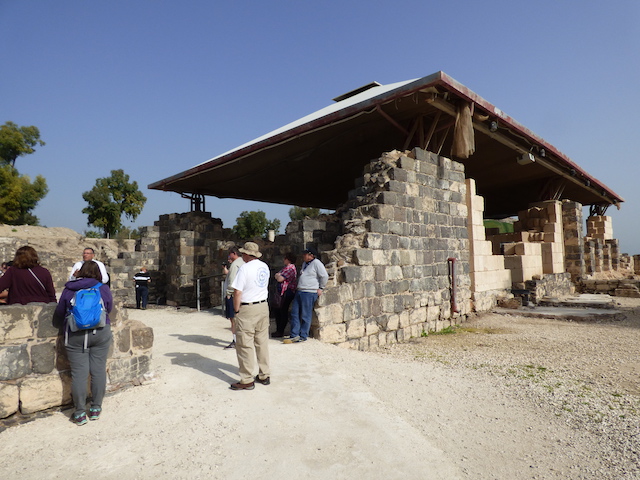
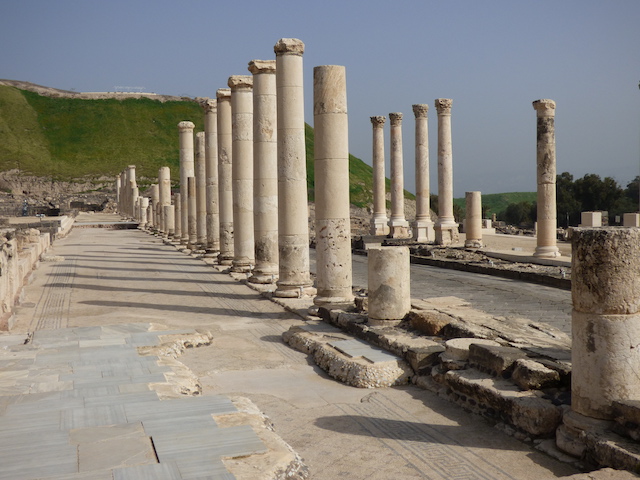
During the 1st century the city of Beit She’an was occupied under the new name “Scythopolis.” It was a large roman city complete with temples, markets, theatres, hippodrome, and bathouses.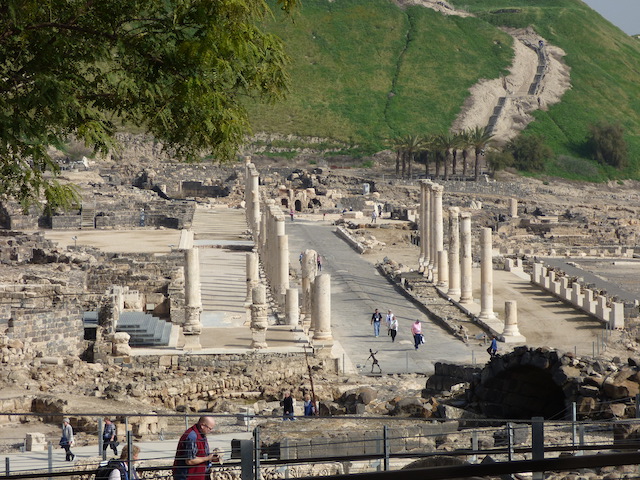
This is the “tel” behind the roman ruins of Beit She’an. Buried under layers of earth is the original Israelite and Philistine city.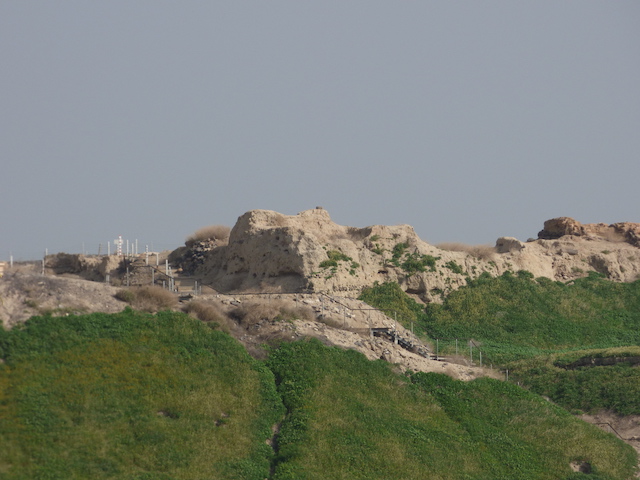
A model of the Roman ruins helps us to get our bearings before entering the ruins.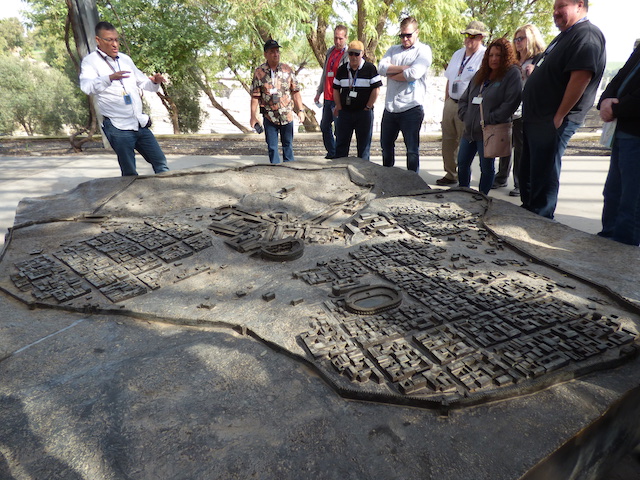
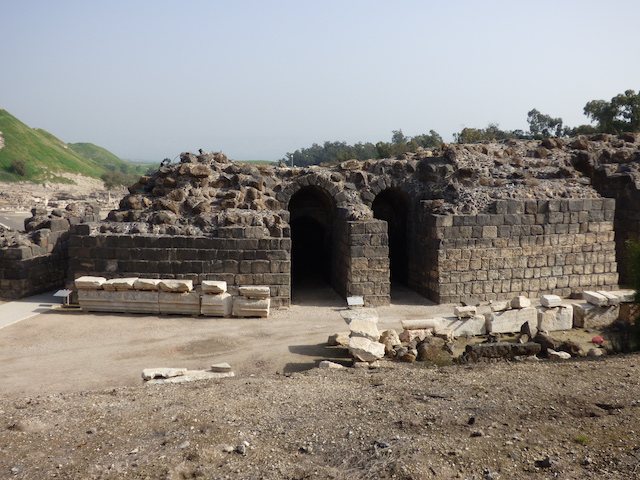
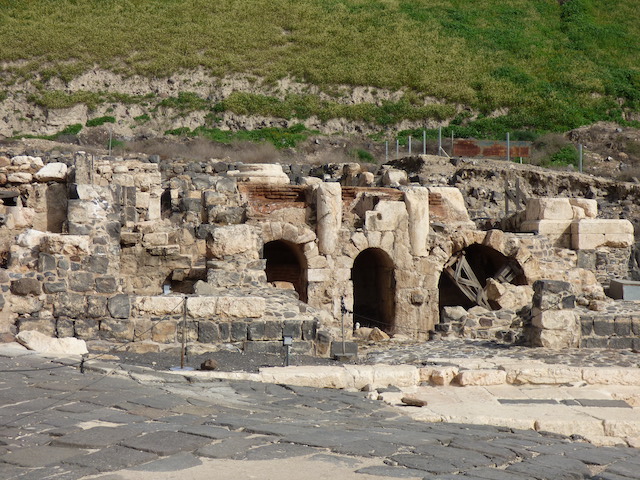
A Roman bathhouse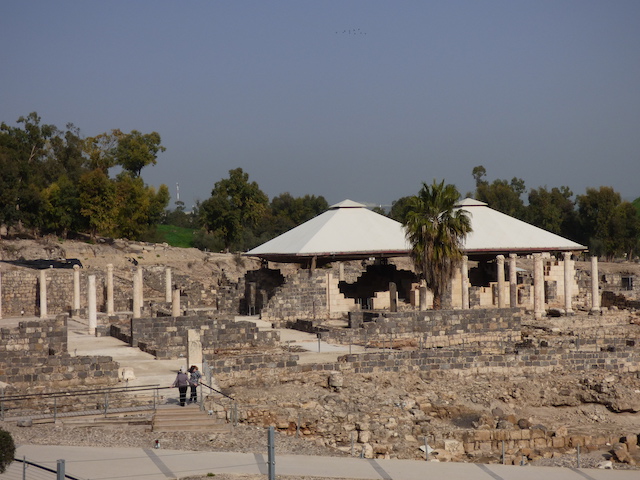
This is one example of how large stones could be transported with a minimum of human labor.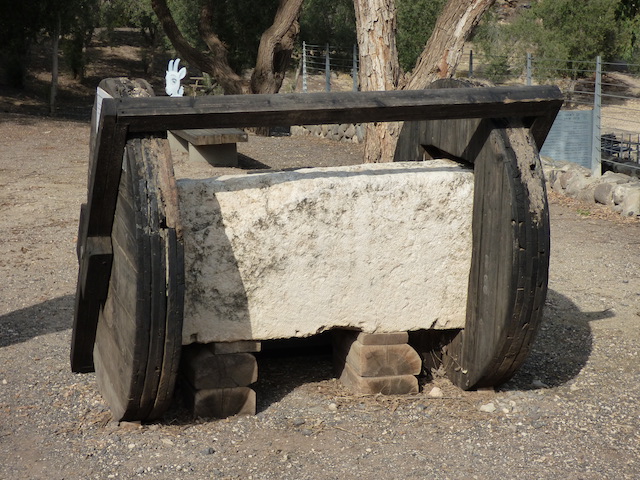
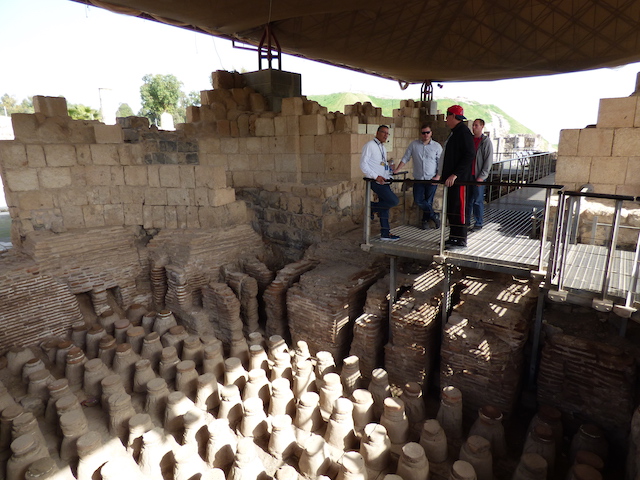
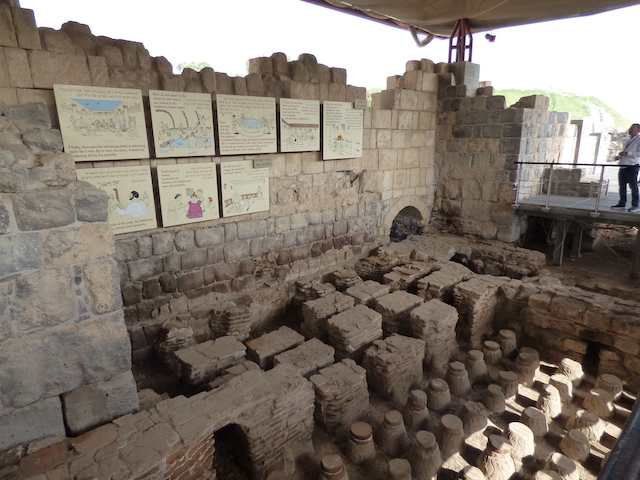
Inside the main section of the bathhouse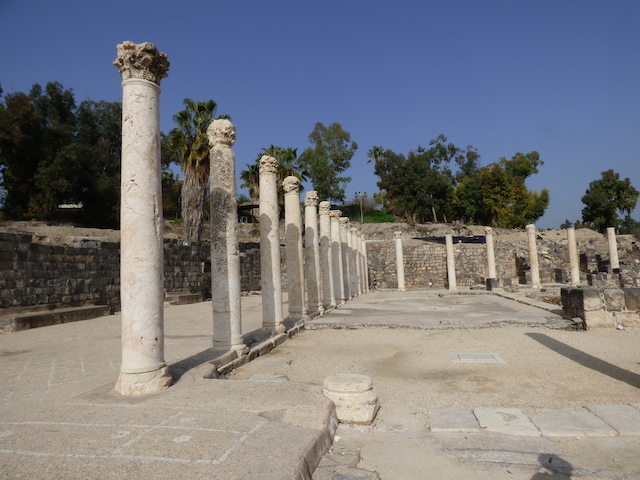

The “hot room” of the bathhouse. A furnace (outside) would pump hot air into the space between the small pillars shown here. On these pillars would be a floor that would heat up. Water was scattered on the floor to make steam (a Roman version of the sauna).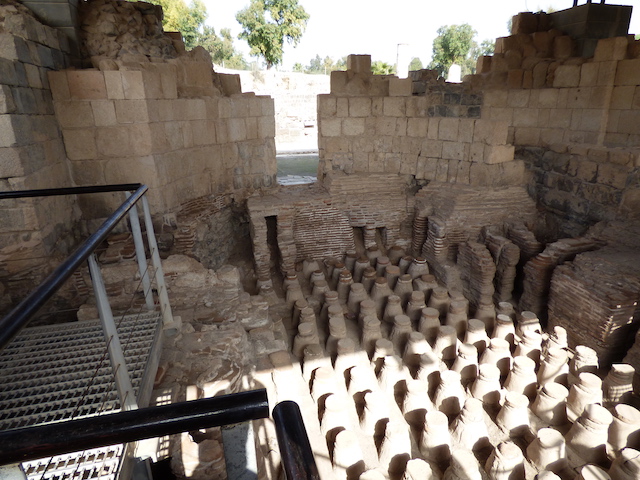
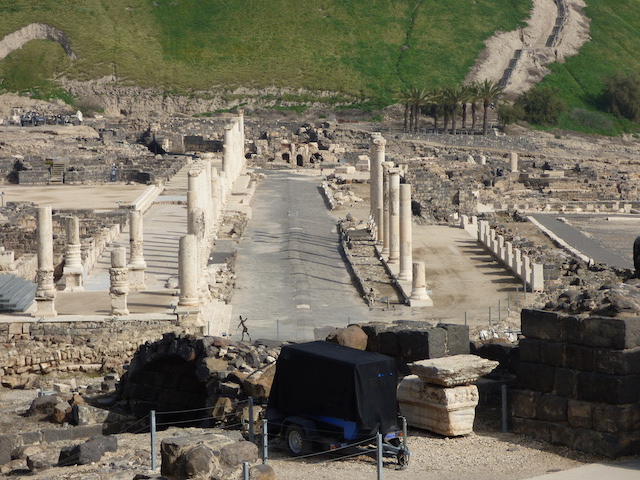
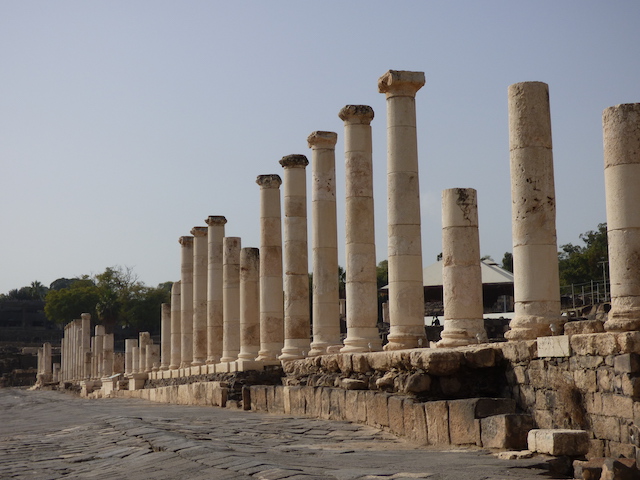
A view of the “cardo” or main road from the bathhouse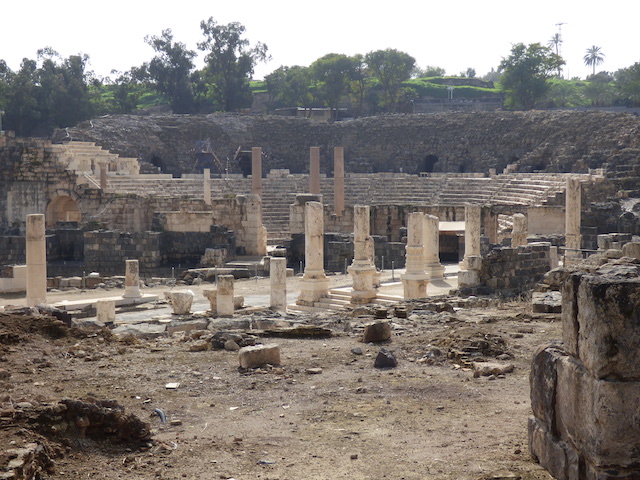
Smaller pools in the bathhouse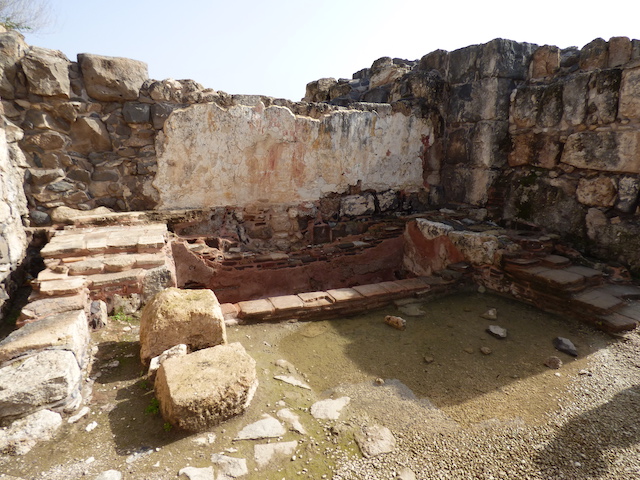
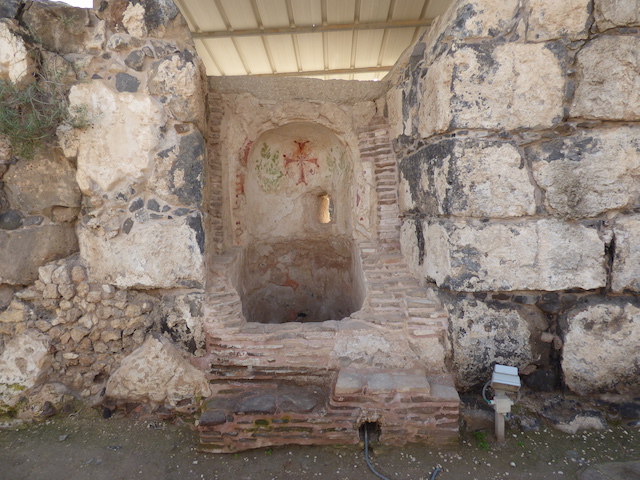
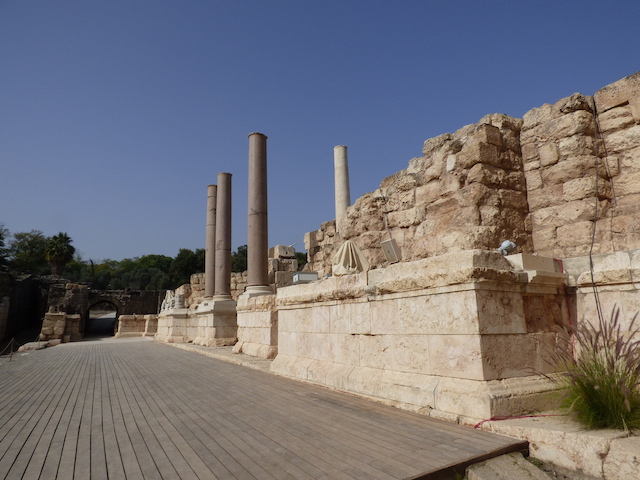
The “cardo” or main road of the city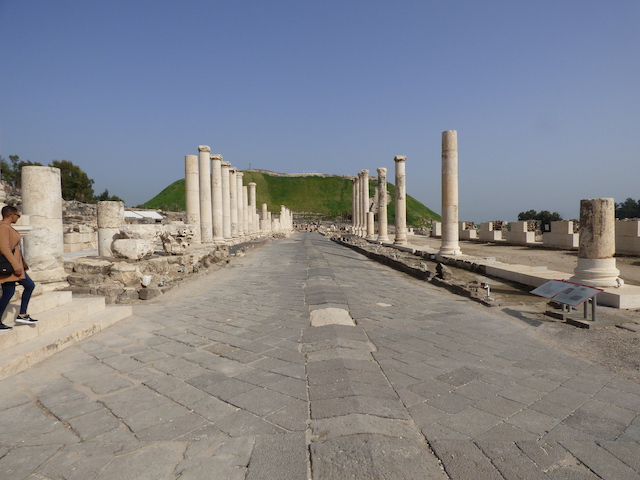
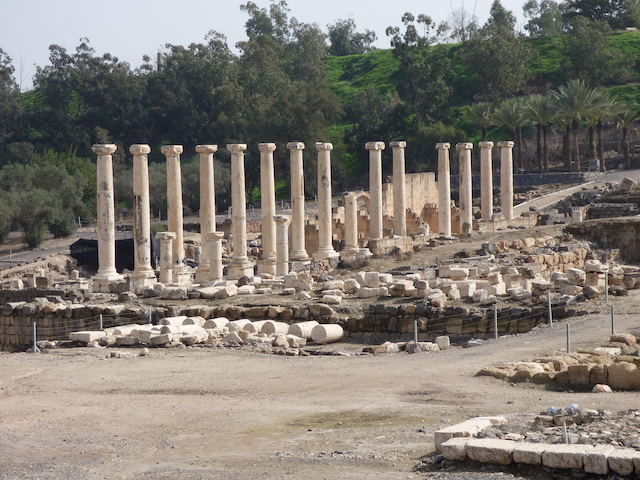
Ruins of the market, facing the theatre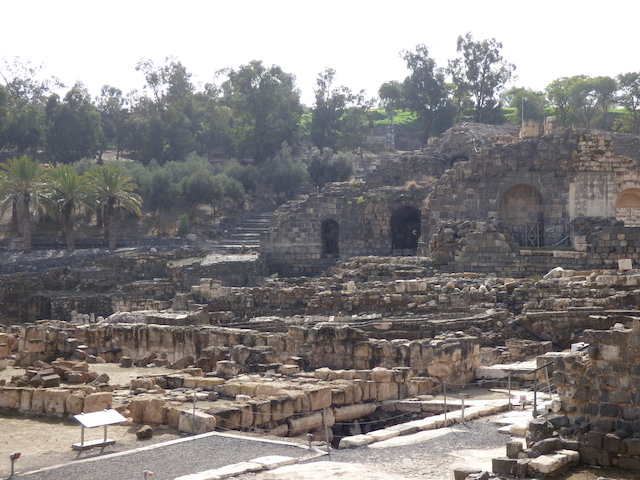
Ruins of a Roman temple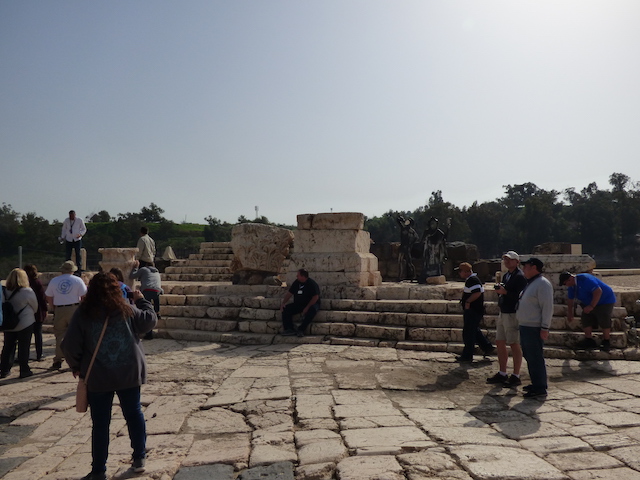
These toppled columns (and their capitals) date from the earthquake that destroyed the city in the 700’s AD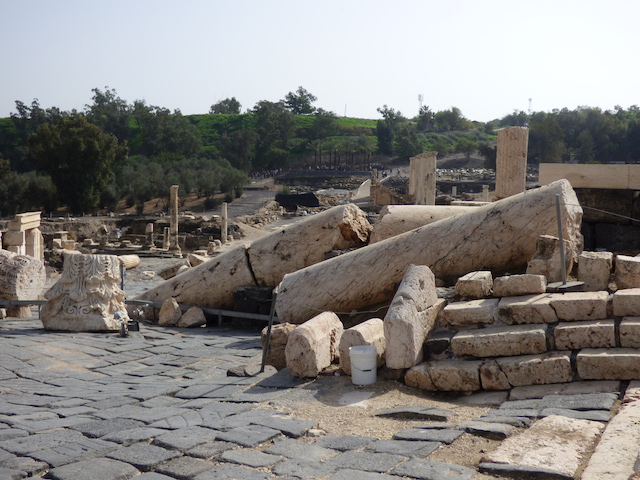
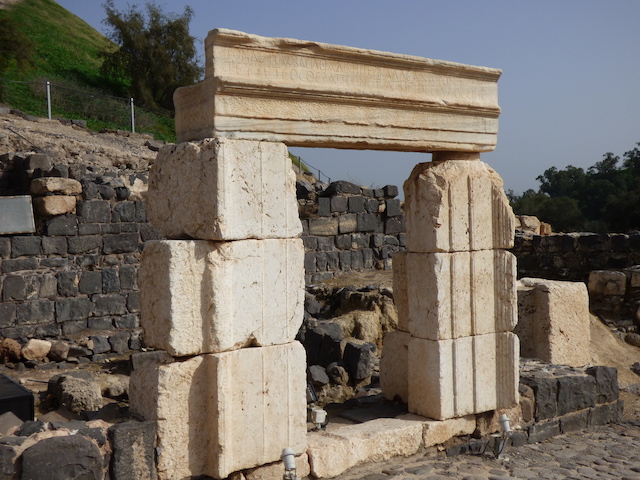
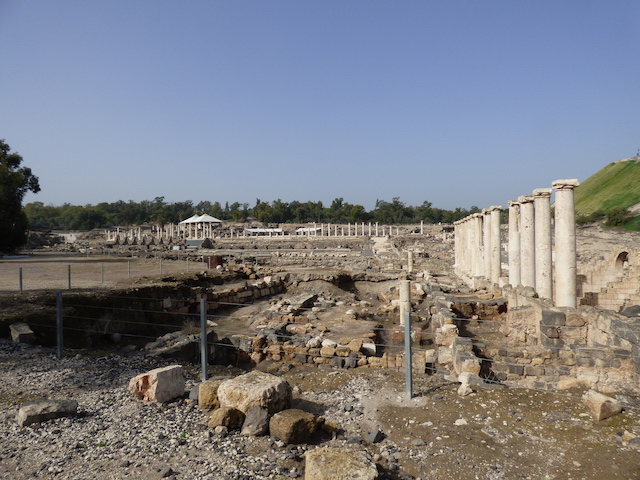
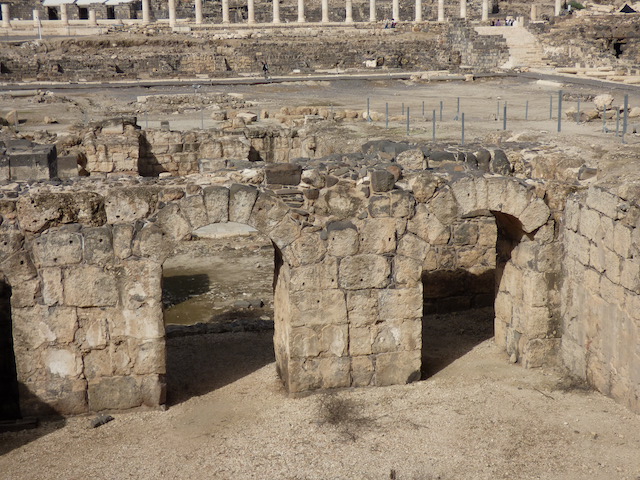
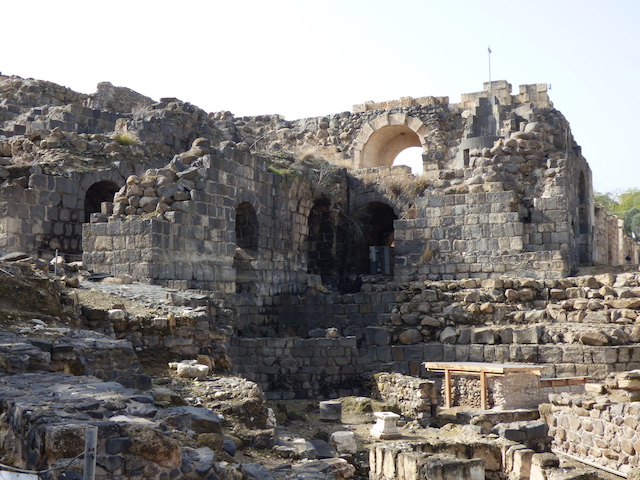
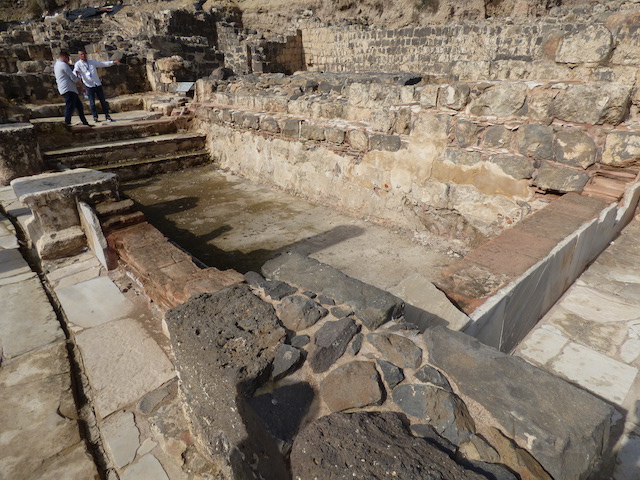
This is a Roman “latrine” or public toilet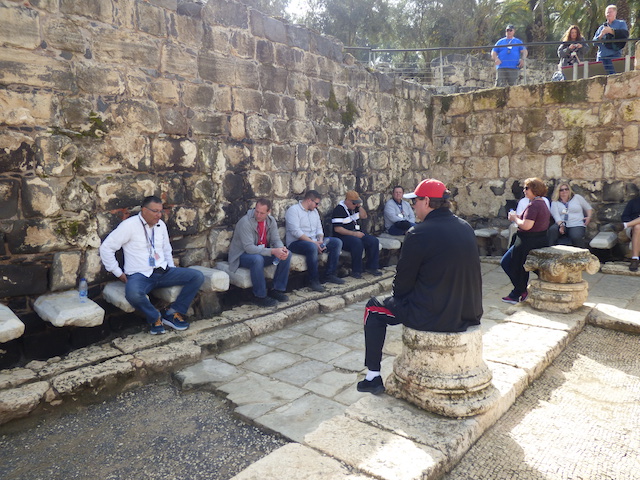
Out guide, Benny, “demonstrates” how the wall toilets were used.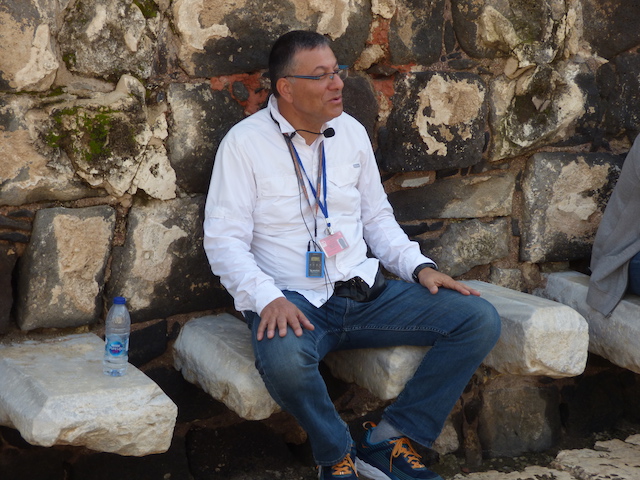
A view from inside the theatre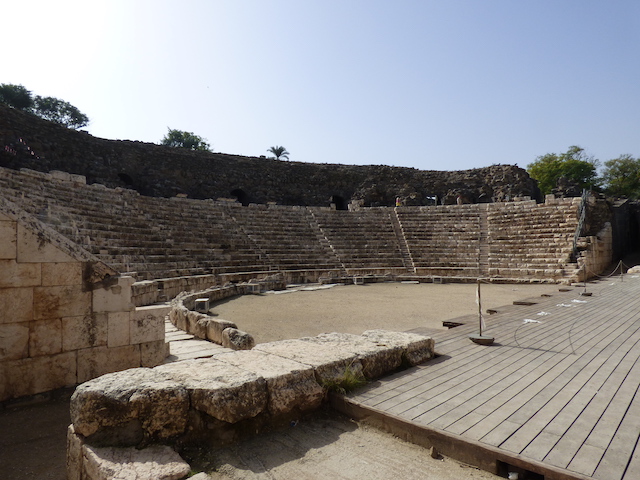
Qasr el Yahud
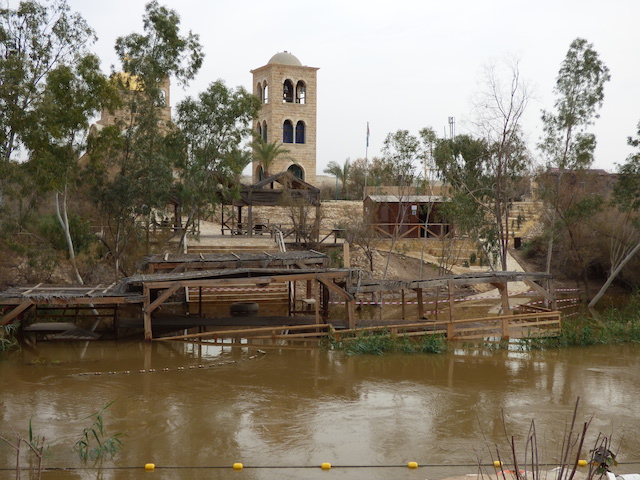
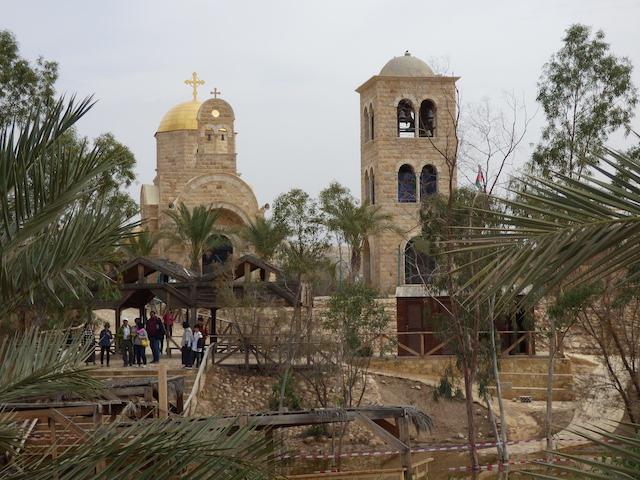
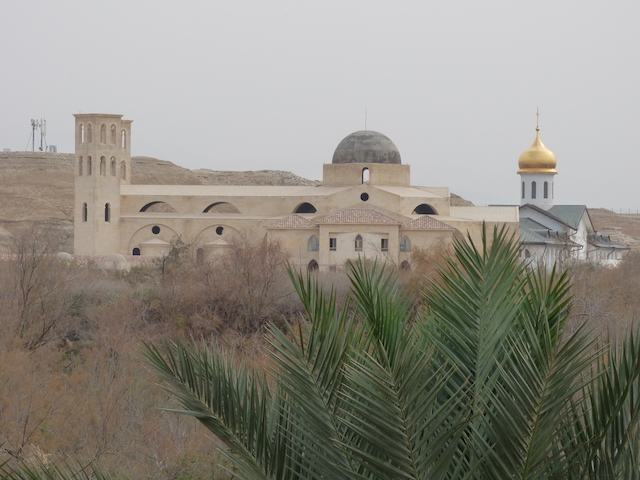
One of two locations thought to be where John the Baptist baptized people (including Jesus). This is more likely the historic site.
The buildings you see across the river are in the country of Jordan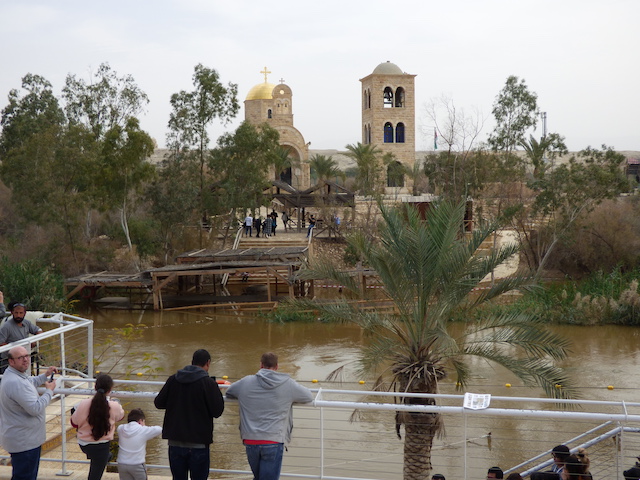
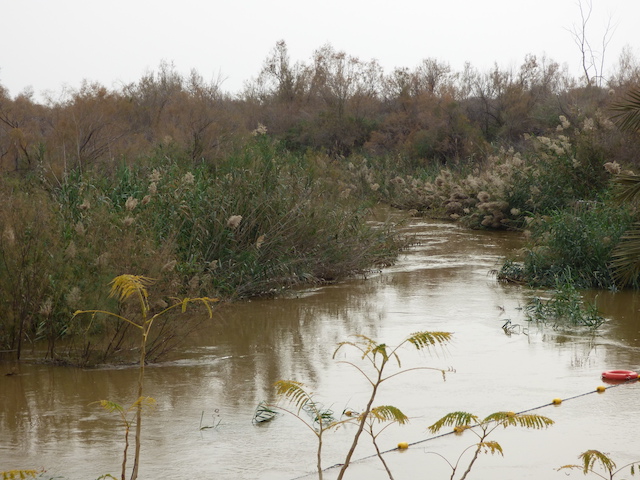
This is the beginning of the Judean wilderness. It’s amazing how different it looks from Galilee in the north.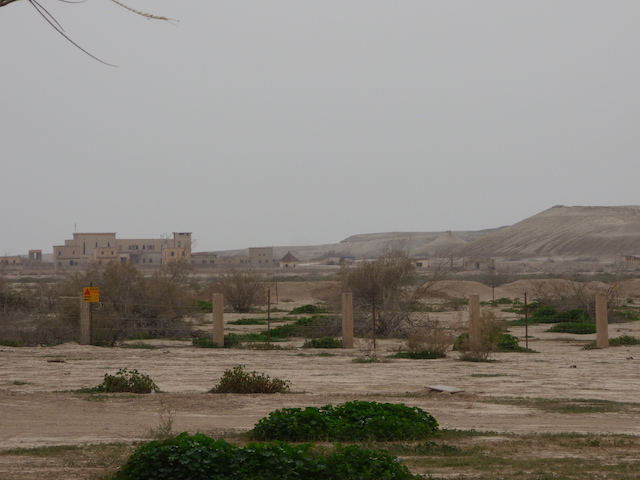
Qumran
Qumran is the location where, in 1947, the first Dead Sea Scrolls were discovered. It was inhabited in the first century by a Jewish sect known as the Essenes.
These are replicas of the clay jars the first scrolls were found in.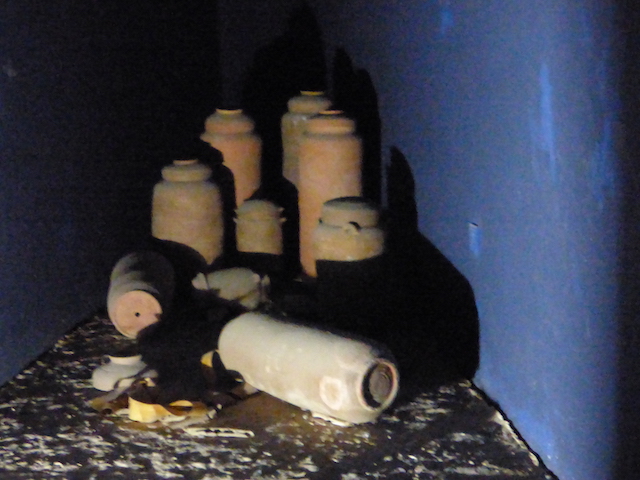
Cooking vessels used by the Essene community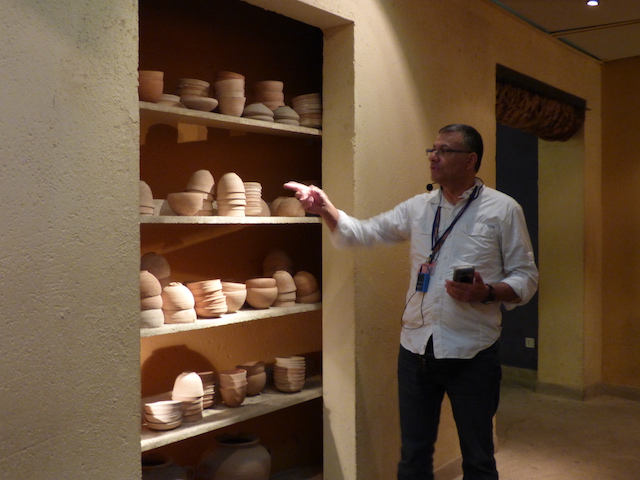
One of the primary tasks of members of the community was to work in the Scriptorum, producing copies of the scriptures and also teachings of their own High Priest.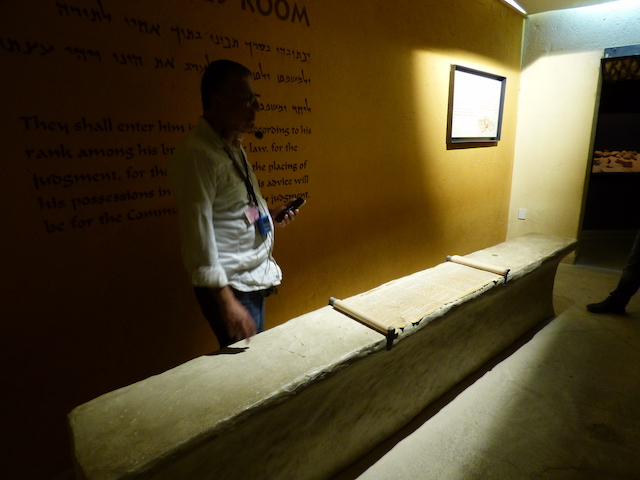
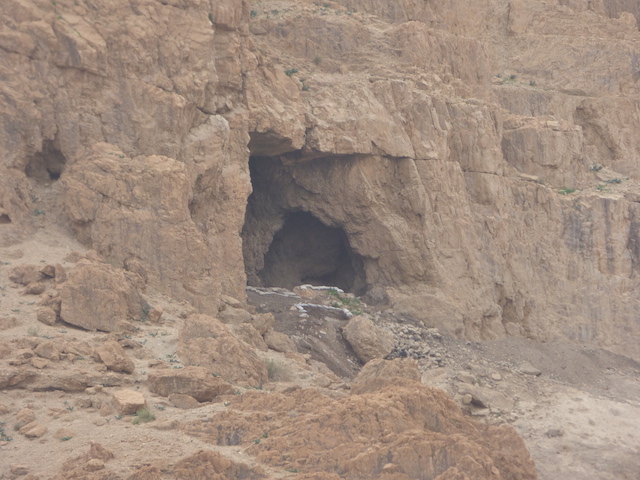
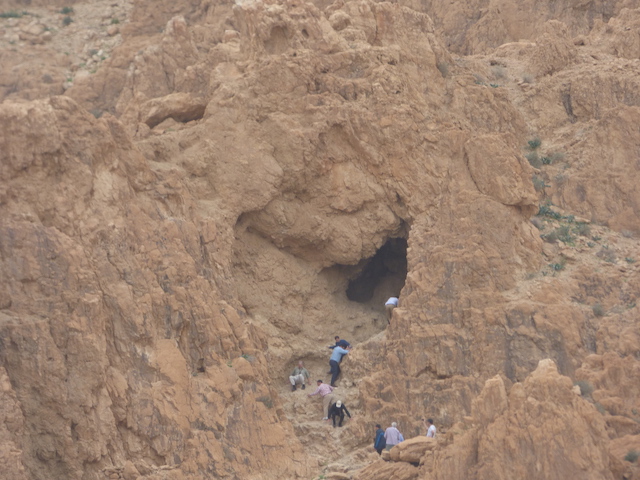
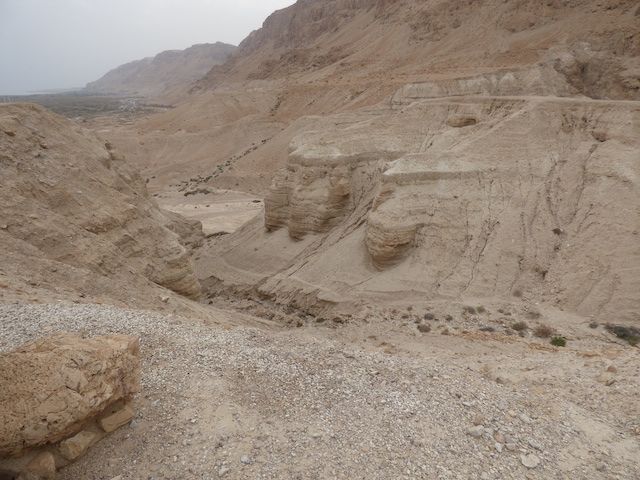
The mountains at Qumran contain thousands of caves. The Essenes didn’t inhabit these caves, but they did use them to hide their collection of scrolls when they were in danger from the Romans.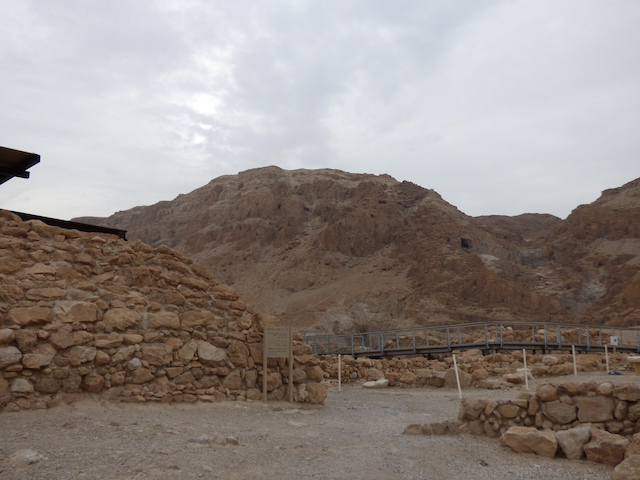
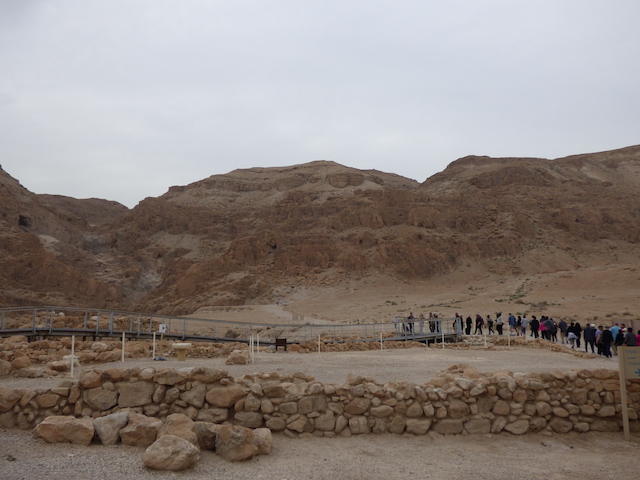
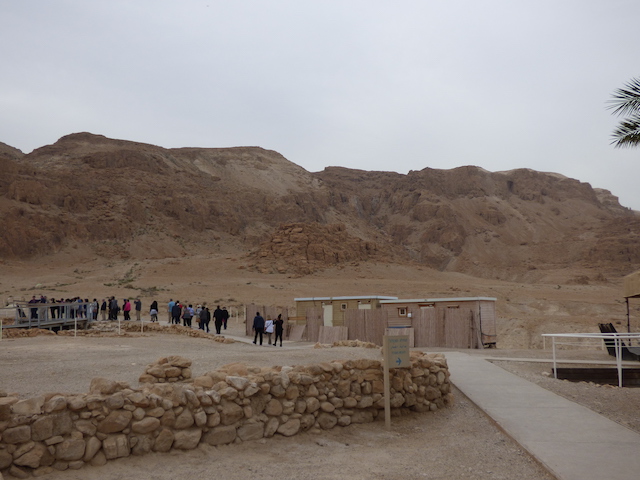

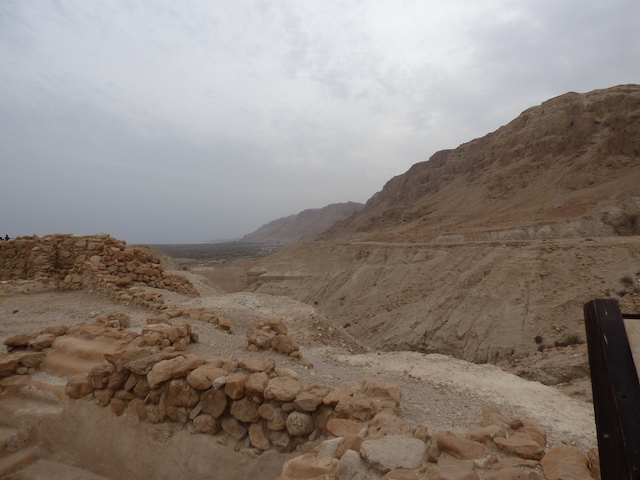
The Essene sect was obsessed with physical purity. The bathed in a ritual bath (Mikvah) twice each day, before the morning and evening meal. There are several Mikvahs at the site.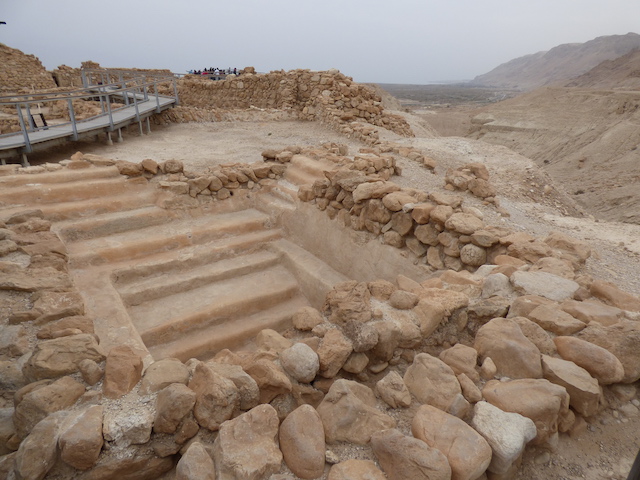
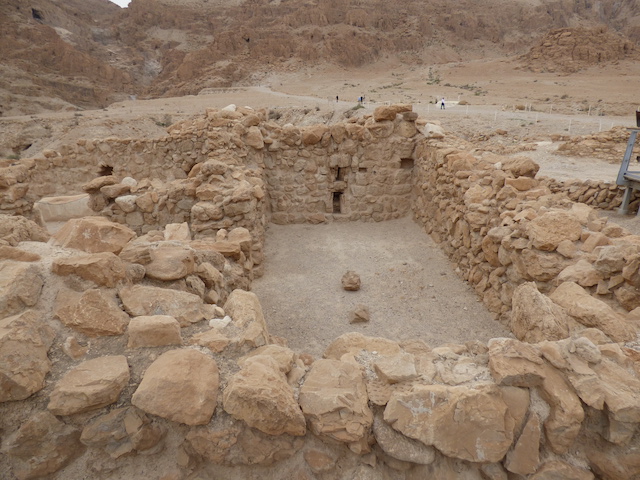
A cistern (used for storing water)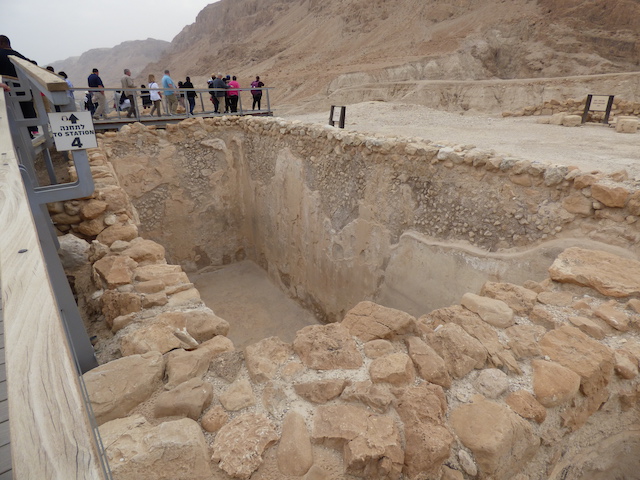
The Dead Sea
Located 1,412 feet BELOW sea level, the Dead Sea is the lowest body of water on earth. It is extremely salty (more than 10 times saltier than sea water). People visit here to float in the waters and use the “black mud” as a skin treatment. Cosmetics made from Dead Sea materials are very popular.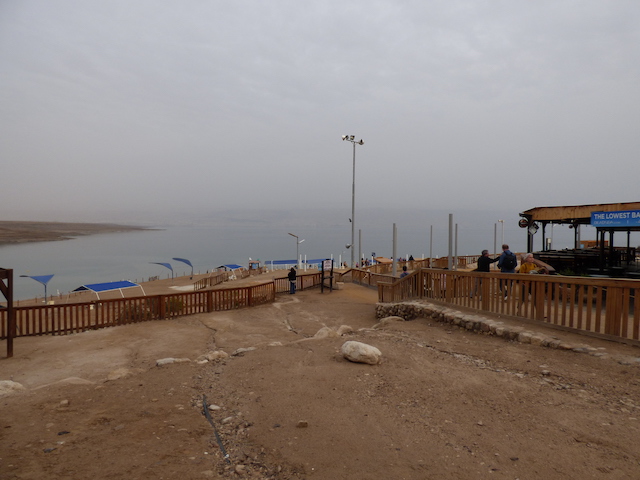
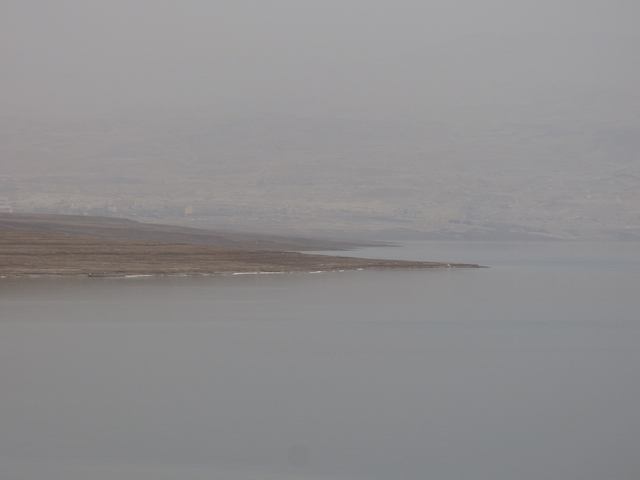
There was a rare sighting of a breaching whale at the Dead Sea! Seriously, if this water lets me float, it will hold up anyone!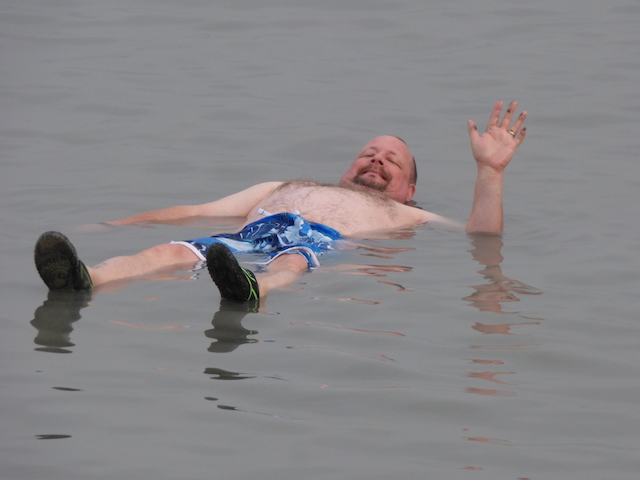
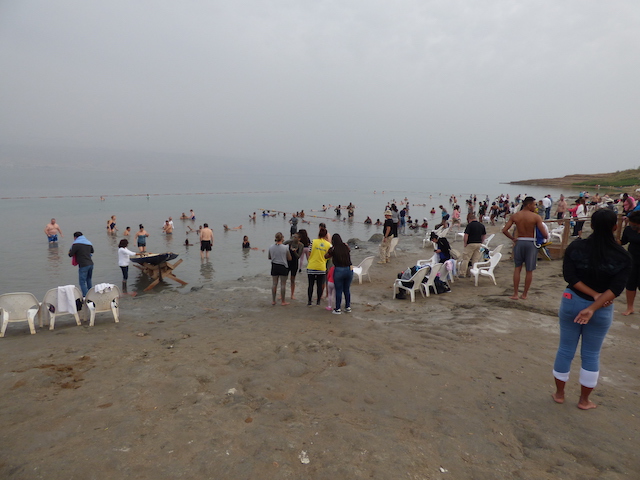
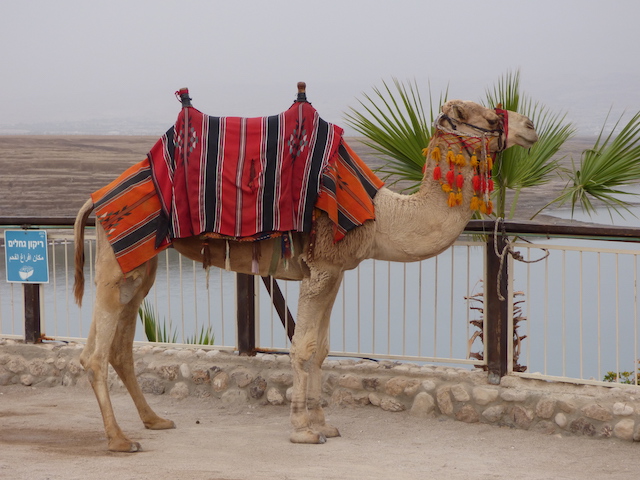
Of course no collection of photos from the Dead Sea would be complete with a picture of a camel.